Big companies aren’t supposed to move fast. They have layers of bureaucracy. They resist change. They protect existing businesses.
But 2026 is different. Corporate giants are innovating at startup speeds. The winners prove that size can be an advantage when combined with urgency.
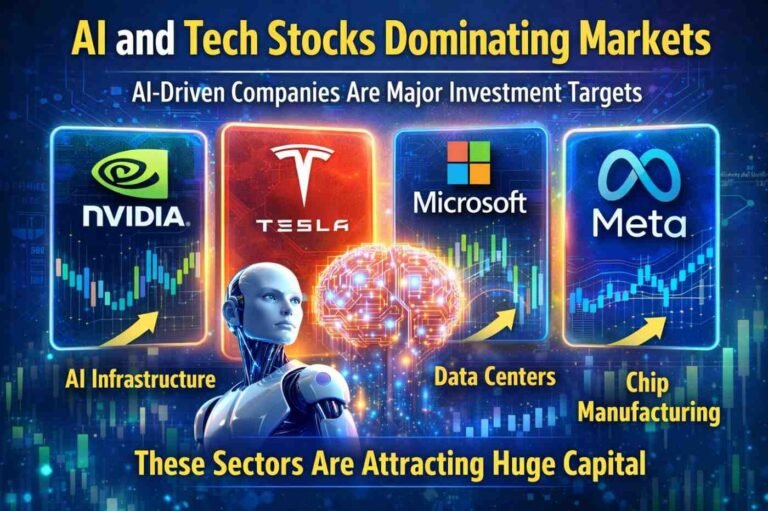
The AI Infrastructure Race
Every major corporation is rebuilding around AI. Microsoft, Google, Amazon, and Alphabet lead this transformation. They’re not just using AI. They’re becoming AI-native enterprises.
Alphabet announced a $75 billion investment in AI infrastructure. AWS doubled its generative AI innovation center investment to $100 million. These aren’t experiments. They’re foundational shifts.
Microsoft integrates disruptive, incremental, and radical innovation simultaneously. They keep product lines fresh while exploring breakthrough technologies. This balanced approach works at scale.
The velocity of AI innovation determines who wins. Organizations moving fast without sacrificing governance capture winner-take-most scenarios.
Open Innovation Becomes Standard
Corporate giants are partnering with startups, universities, and even competitors. Closed innovation can’t keep pace with market changes.
Fraport partnered with Plug and Play to leverage startup ecosystems. They enhanced operational efficiency and customer service through external innovation.
Google maintains innovation labs and external partnerships. This approach keeps them ahead despite their massive size.
Co-development tracks and venture funds share risk while accessing promising solutions. The days of doing everything in-house are finished.
Regional Decentralization Accelerates
Multinational firms are adapting organizational structures to geopolitical complexity. One-size-fits-all global approaches fail in 2026’s fragmented world.
Sovereign and local AI processing becomes standard. Governments tighten data residency and compliance mandates. Companies build regional capabilities accordingly.
Climate policies create multi-speed environments. California, Massachusetts, and New York advance clean-energy agendas. Red states champion oil and gas. Corporations must navigate these divergent jurisdictions simultaneously.
Outcome-Based Business Models
Technology companies are transforming pricing. Outcome-based models replace traditional licensing. Customers pay for results, not software access.
This shift changes sales cycles and customer relationships. It requires demonstrating measurable ROI constantly. But it also aligns incentives perfectly.
JPMorgan Chase surveys show 58% of business leaders prioritize introducing new products or services in 2026. Another 53% focus on expanding into new markets. Growth strategies are evolving.
M&A and Strategic Partnerships
Corporate giants are using mergers, acquisitions, and joint ventures strategically. Thirty-nine percent of middle-market leaders plan M&A activity in 2026.
These aren’t just about scale. They’re about acquiring capabilities quickly. Building everything organically takes too long.
Strategic partnerships allow companies to enter adjacent markets without full acquisitions. Risk sharing becomes crucial in uncertain environments.
Healthcare Innovation at Scale
Alcon won 2026’s top enterprise innovation award. Their UNITY VCS combined vision system enables more cataract and vitreoretinal surgeries daily without compromising patient safety.
This addresses critical healthcare capacity challenges from aging populations. Large organizations solving real problems win recognition and market share.
Healthcare efficiency gains from enterprise innovation matter enormously. The industry needs solutions that scale across thousands of facilities.
Cybersecurity Gets Foundational
Badge Inc developed “Identity without Secrets” cryptographic technology. It eliminates stored credentials entirely. This prevents the single biggest security vulnerability.
Cybersecurity shifted from IT problem to board-level priority. Every major corporation invests heavily in security infrastructure.
The rise of autonomous systems and AI agents creates new attack surfaces. Security must be embedded from design, not added afterward.
Physical AI and Robotics
Corporate giants are investing in physical AI applications. This moves beyond software into tangible automation.
Amazon deployed its millionth warehouse robot. DeepFleet AI coordinates entire robot fleets, improving efficiency by 10%.
BMW factories have cars driving themselves through kilometer-long production routes. Intelligence isn’t confined to screens anymore.
Physical AI represents differentiated offerings. It creates competitive moats difficult for smaller competitors to replicate.
Context-as-a-Service Emerges
The battle in 2026 isn’t about the brightest AI model. It’s about the richest, most defensible context.
New firms help clients curate, govern, and audit information environments. This creates comprehensive proprietary intelligence.
Professional services and legal-tech sectors see massive opportunities. Context provisioning becomes a multi-billion dollar industry.
ESG Integration Despite Polarization
Corporations maintain consistent global sustainability strategies while navigating regional variations. Some regions support ESG efforts. Others restrict them.
Middle Eastern sovereign wealth funds invest heavily in hydrogen, clean manufacturing, and circular-economy infrastructure. The region shifts from vision to institutionalization.
Companies sustaining clarity of purpose and aligning with forward-looking norms set the pace. Long-term orientation beats short-term political maneuvering.
Workforce Transformation
Talent shortages force corporations to invest in training and adaptability. Over 60% of executives cite digital disruption as their top strategic concern.
Tesla and Amazon illustrate how continuous reinvention is vital. They transform workforces constantly rather than protecting legacy skills.
Hybrid program delivery and regional partnerships expand talent access. Employer-backed paths into employment become standard.
Small Business Resilience
Small business optimism remains steady entering 2026. Owners navigated persistent cost pressures throughout 2025. They’re making smart investments and doubling down on innovation.
“They’re setting the pace for Main Street,” said Ben Walter, CEO of Chase for Business. Small businesses demonstrate remarkable resolve.
This resilience contrasts with middle-market volatility. Smaller firms face domestic challenges directly. Larger companies deal with geopolitical complexity.
The Measurement Imperative
Corporate innovation strategies now prioritize measurement. Building flexibility into metrics is crucial as conditions evolve rapidly.
Regular reviews and real-time analytics help organizations adapt. They maximize return on investment through constant adjustment.
Successful companies ensure innovation delivers sustained value and continuous improvement. Vanity metrics are rejected.
What Separates Winners from Losers
Legacy brands that failed to innovate lost market share and relevance. Those prioritizing agility, continuous learning, and technology integration thrive.
Winners foster cultures embracing change. They measure progress vigilantly. They remain alert against disruption.
Successful strategy leaders address challenges head-on. They build resilience needed for future growth.