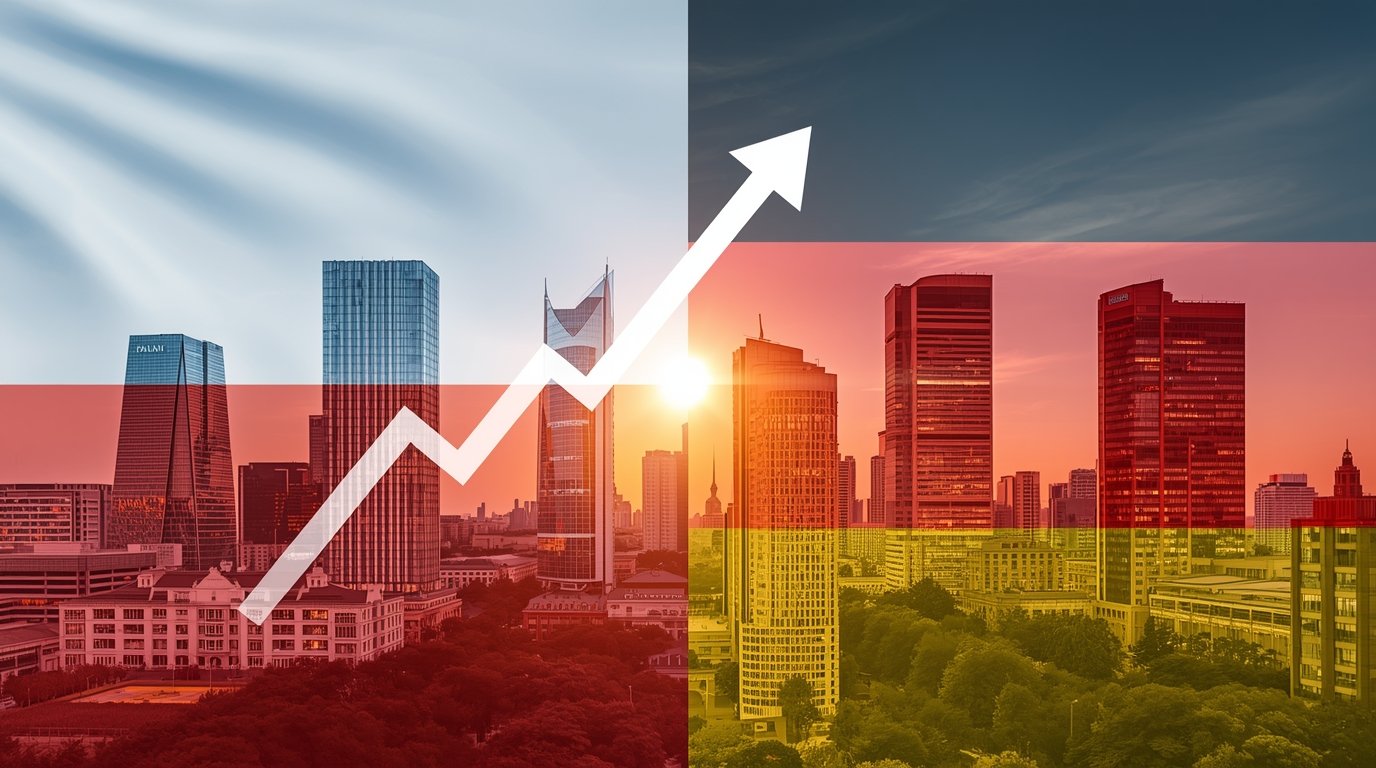
Poland just crossed an extraordinary milestone. Its economy surpassed $1 trillion in 2025. This makes it the 20th largest economy in the world.
But size isn’t the most remarkable part. Polish companies are now buying German businesses. The student has become the teacher. The former Eastern Bloc nation is acquiring assets in Europe’s traditional economic powerhouse.
The Historic Reversal
Three decades ago, Polish students studied in Germany dreaming of Western prosperity. Poland was emerging from communism. Its economy was opening to foreign investors. Germany seemed untouchable.
Today, the script has flipped. Polish tech executive Jacek Swiderski founded an internet company in the 1990s. Now his Wirtualna Polska Holding just acquired Germany’s third-largest travel platform. The deal cost €240 million ($283 million).
This isn’t an isolated case. Polish companies announced 22 acquisitions in Western Europe during 2025. Nine of those deals were in Germany. That’s a record.
The Numbers Tell the Story
Poland’s economic growth is remarkable. The OECD expects 3.4% growth in 2026. That’s the fastest rate in the entire European Union.
Germany’s economy grew just 0.2% last year. It’s flirting with stagnation. Meanwhile, Poland is expanding at nearly 20 times that rate.
When Poland joined the EU, German GDP per capita was four times higher. Today it’s only double. The gap is closing fast.
Prime Minister Donald Tusk announced the trillion-dollar milestone proudly. “Poland has just joined the very exclusive club of trillionaire countries,” he said. “There are only 20 such countries in the world. And this is not our last word.”
How Poland Built a Trillion-Dollar Economy
The transformation started immediately after communism fell. Poland made bold choices. Prices were liberalized quickly. State companies were privatized. Trade barriers came down.
The strategy was “feel the pain early.” Get the difficult reforms done fast. Macro stability would follow.
It worked. Inflation came under control. The banking system strengthened. Poland avoided the prolonged economic collapse that hit other former Soviet states.
Poland’s GDP increased sevenfold since 1990. That’s an astonishing achievement. The country experienced uninterrupted economic growth since 1992. Not even the 2008 financial crisis stopped the expansion.
The Services Boom
Poland became Europe’s back office. Call centers, shared service centers, and IT operations moved east. Companies needed English-speaking workers close to Western headquarters. Poland fit perfectly.
The business services sector now employs half a million people. It accounts for 6% of GDP. Cities like Kraków transformed into white-collar hubs.
Unemployment in Kraków fell to just 2%. Wages rose rapidly. The city became a magnet for young professionals.
This convergence engine powered growth for years. Polish workers earned Western contracts at lower costs. Geography, EU membership, and language skills created competitive advantages.
Polish Companies Go Shopping
The most symbolic change is outward investment. Polish firms accumulated capital at home. Now they’re deploying it abroad.
Wirtualna Polska acquired Invia Group’s travel platform. Spyrosoft bought German IT services companies. Pesa purchased German rail manufacturing assets. These aren’t small deals. They represent serious acquisitions.
InPost, the parcel locker operator, expanded aggressively across Western Europe. The company is now valued at nearly €8 billion. A potential buyout could make it even larger.
These acquisitions signal maturity. Poland isn’t just growing domestically anymore. Its companies compete globally. They see opportunities in struggling German firms and seize them.
Why German Companies Are Available
Germany faces significant challenges. Energy costs skyrocketed after Russia’s invasion of Ukraine. The country relied heavily on cheap Russian natural gas. That era ended abruptly.
German exports suffered from weak demand in China. The country’s export-heavy economy struggled. U.S. tariffs added more pressure.
Germany recorded two consecutive years of economic contraction. Businesses struggled. Some became distressed assets. Polish buyers saw opportunities.
German companies also face structural issues. High labor costs, strict regulations, and aging infrastructure create challenges. Poland offers lower costs and more flexibility.
The Risks Poland Faces
Poland’s success isn’t guaranteed to continue. Several serious risks loom.
Demographics present the biggest challenge. Poland’s fertility rate sits at 1.1 children per woman. That’s one of the lowest in the world. The population could shrink by several million by mid-century.
Fewer workers will support more retirees. Without automation or immigration, growth will slow. This demographic time bomb threatens future prosperity.
Public finances are stretched. The budget deficit exceeds 6% of GDP. That’s double the Maastricht criterion for euro entry. Public debt approaches 70% of GDP.
Defense spending consumes 5% of GDP. That’s the highest share in NATO. Ukraine’s war created security concerns. Poland responded by massively increasing military expenditure.
The AI Disruption
Artificial intelligence threatens Poland’s services advantage. Back-office work is being automated. Data processing and accounting roles face elimination.
Kraków companies announced over 4,000 planned layoffs in 2025. Most were in routine administrative functions. AI can now handle these tasks more cheaply.
Poland built its services sector on cost advantages and skilled workers. As AI improves, both advantages erode. The country must move up the value chain or risk losing ground.
The Euro Question
Poland hasn’t adopted the euro. It retains monetary sovereignty. This provides flexibility during transitions.
The government argues euro adoption is a political decision. Warsaw will decide when the time is right. For now, Poland keeps its zloty currency.
However, fiscal deficits far exceed Maastricht criteria. Poland can’t join the eurozone until it meets those thresholds. The high defense spending and infrastructure investments make this difficult.
Some economists argue Poland should join eventually. Euro membership would reduce transaction costs. It would deepen integration with Western Europe.
Others prefer monetary independence. Poland can adjust interest rates and exchange rates as needed. Eurozone members lack this flexibility.
What Polish Success Means for Europe
Poland’s rise shifts European economic dynamics. The EU’s center of gravity is moving east. For decades, Germany, France, and the UK dominated. Now Poland demands a seat at the table.
EU funding played a crucial role in Polish development. Billions in structural funds financed infrastructure. Roads, railways, and airports were built or modernized.
Critics in Western Europe sometimes resent these transfers. But Poland’s growth benefits everyone. A richer Poland buys more German cars and French wine. Economic integration creates mutual prosperity.
Poland’s success also proves the EU model works. Countries can converge economically. Poorer members can catch up to richer ones. The process takes time and smart policies, but it’s possible.
The Geopolitical Dimension
Poland’s location matters strategically. It borders Ukraine, Belarus, and Russia’s Kaliningrad exclave. The country sits on NATO’s eastern flank.
Poland’s military spending reflects these realities. The country takes defense seriously. It doesn’t rely solely on NATO guarantees. It builds its own capabilities.
This defense-first approach creates economic opportunities. Polish defense companies are growing. International arms makers invest in Poland. The country becomes a regional military hub.
Poland’s strong stance on Ukraine also matters. The country provides substantial aid. It accepts millions of refugees. This leadership enhances Poland’s diplomatic influence.
Looking Forward
Can Poland sustain this momentum? The next decade will be crucial. Addressing demographics, fiscal deficits, and industrial transformation will determine success.
The government plans massive infrastructure investments. Roads, railways, and digital networks need upgrading. These projects could boost productivity if executed well.
Education reforms aim to maintain workforce quality. As population shrinks, productivity per worker must rise. Poland invests heavily in technical education and universities.
Innovation becomes increasingly important. Poland must move from assembly and services to design and innovation. This transition takes time but is essential.
The German Perspective
How do Germans view Polish acquisitions? Reactions are mixed. Some welcome the investment. Polish buyers bring fresh capital and ideas.
Others feel uneasy seeing traditional German companies in Polish hands. It challenges assumptions about economic hierarchies. Germany was supposed to be the buyer, not the seller.
Business pragmatism usually prevails. If Polish companies pay fair prices and maintain jobs, most stakeholders accept the deals. Economic nationalism exists but doesn’t dominate.
The acquisitions also reflect broader European integration. Capital flows in all directions. French companies buy German assets. Spanish firms acquire Italian businesses. Polish investments are part of this pattern.
The Bottom Line
Poland’s achievement is remarkable. From a communist economy in 1989 to a trillion-dollar powerhouse in 2025. That’s 36 years of transformation.
The country now flexes economic muscle in Germany. Polish firms buy established businesses. This reversal would have seemed impossible three decades ago.
Challenges remain. Demographics, debt, and technological disruption pose serious risks. But Poland has overcome bigger obstacles before.
The trillion-dollar milestone is significant. But as Prime Minister Tusk said, “this is not our last word.” Poland aims higher.
The next chapter of European economic history is being written. Poland is no longer just a supporting character. It’s becoming a protagonist.