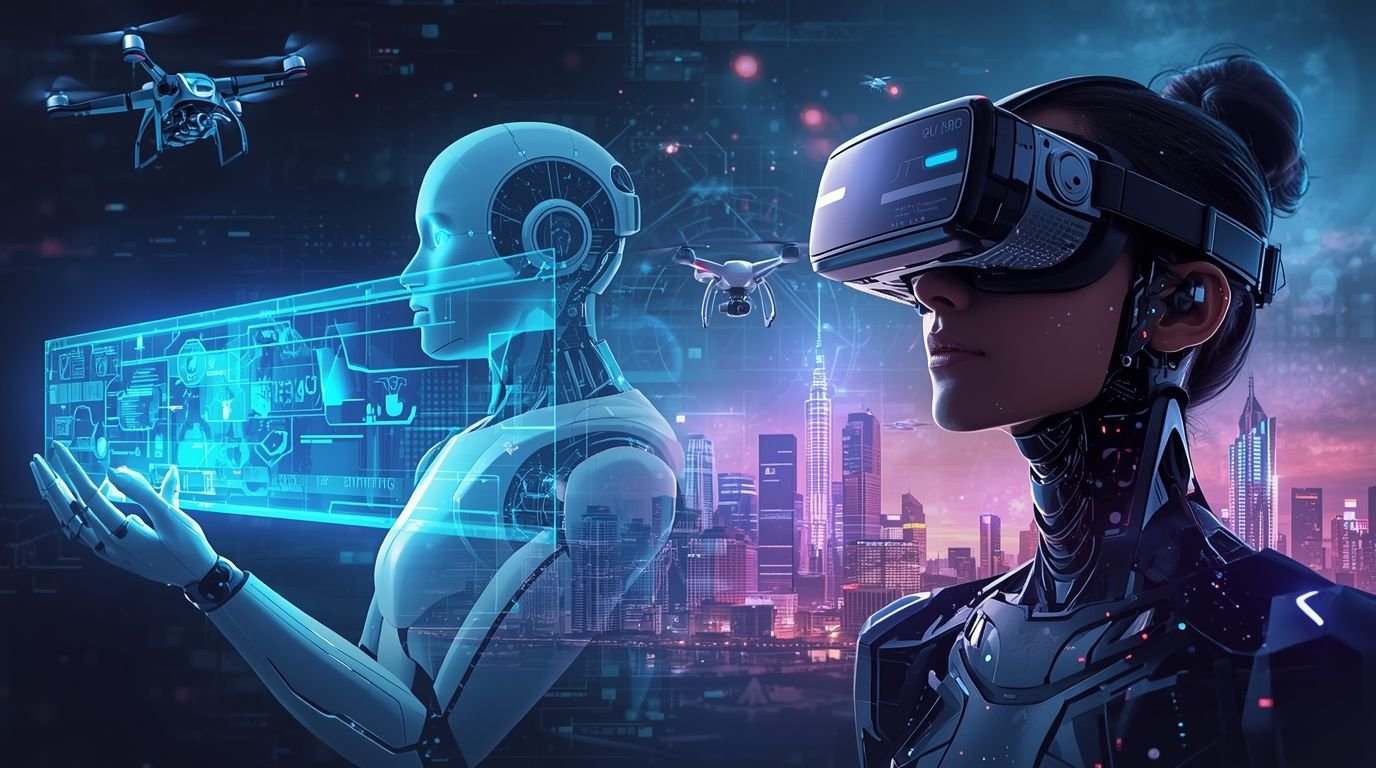
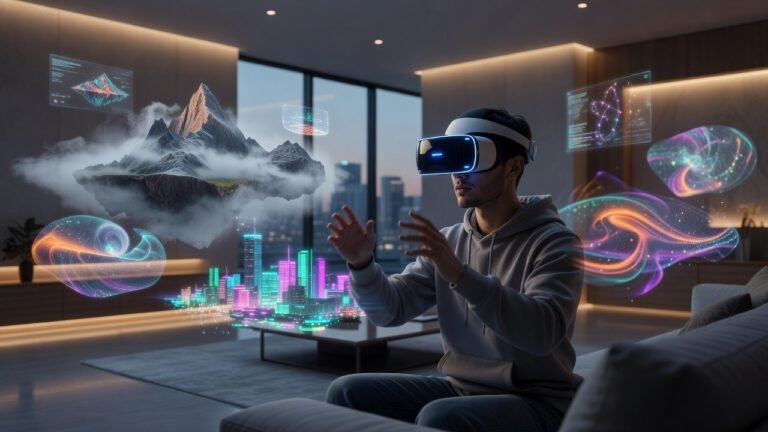
Science fiction is becoming science fact. Technologies that seemed impossible just years ago are now in active development. Some will launch in 2026.
Here are ten innovations moving from imagination to reality.
1. Brain-Computer Interfaces That Restore Sight
Neuralink aims to restore partial vision to fully blind patients this year. The Blindsight implant represents their most powerful brain chip yet.
Early human trials begin in 2026. The device interprets brain signals and creates visual experiences. It bypasses damaged eyes completely.
Other BCIs now fit between strands of hair. They’re minimally invasive. They detect brain signals with unprecedented precision.
2. Quantum Computing Reaches Practical Use
IBM publicly stated 2026 marks a milestone. Quantum computers will outperform classical computers for the first time.
This unlocks breakthroughs in drug development, materials science, and financial optimization. Real use cases are already being tested, not just theoretical applications.
The UK Quantum Skills Taskforce estimates 250,000 quantum computing jobs by 2030. That explodes to 840,000 by 2035.
3. Xenotransplantation Using Gene-Edited Pig Organs
Precision genome editing with CRISPR solved the rejection problem. Scientists eliminated alpha-gal, a pig carbohydrate that triggers human immune responses.
Massachusetts General Hospital performed the first transplant using eGenesis pig organs in 2024. Patient outcomes improved dramatically with next-generation immunosuppressants.
This tackles the organ shortage crisis. Thousands die annually waiting for transplants. Gene-edited pig organs offer unlimited supply.
4. Nuclear Fusion Approaching Reality
Lawrence Livermore National Laboratory achieved net energy from fusion in 2022. The Joint European Torus set power production records in 2023.
Small modular reactors are coming online. Russia and China have active SMRs. At least 100 projects are under development worldwide.
Canada’s Darlington facility goes online in 2029. TerraPower pursues molten-salt reactors that reduce nuclear waste dramatically.
5. Autonomous Physical AI Robots
Amazon deployed its millionth warehouse robot. DeepFleet AI coordinates entire robot fleets, improving efficiency by 10%.
BMW factories have cars driving themselves through kilometer-long production routes. Intelligence isn’t confined to screens anymore.
Physical AI revolutionizes manufacturing, logistics, maintenance, and security. Robots handle routine monitoring while humans focus on complex decisions.
6. Sodium-Ion Batteries Replace Lithium
Sodium-ion batteries use abundant materials like salt. They’re cheaper and safer than lithium alternatives.
Major players and public investment back this technology. They’re poised to power electrical grids and affordable EVs worldwide.
The shift reduces dependence on rare earth minerals. It makes renewable energy storage more accessible globally.
7. Bespoke Gene-Editing Treatments
Baby KJ became the first person to receive personalized gene-editing treatment at seven months old. Clinical trials are now planned.
Bespoke gene-editing drugs could be approved within the next few years. Each treatment is customized to the individual patient’s genetic makeup.
This transforms medicine from one-size-fits-all to truly personalized care. Rare genetic diseases become treatable.
8. AI Coding Assistants Revolutionize Development
GitHub Copilot and Cursor AI suggest code in real-time. They complete functions, fix bugs, and explain complex code automatically.
Software development productivity increased 55% with AI assistance. Even non-programmers can now build basic tools.
These tools don’t replace developers. They eliminate repetitive work and accelerate development cycles dramatically.
9. Digital Twins for Predictive Maintenance
Digital twins create virtual replicas of physical objects or processes. Factories and airplane engines get monitored and analyzed in real-time.
This enables predictive maintenance and optimized resource allocation. It improves product development processes significantly.
BMW and other manufacturers already deploy this technology. It prevents failures before they happen.
10. Companion AI Robots Fighting Loneliness
AI companions provide steady emotional presence. They offer consistent, judgment-free companionship that alleviates isolation.
They handle routine monitoring for elderly care. Humans focus on complex decision-making and deeper relationships. This creates a collaborative care model.
Robots board public transportation autonomously. They synchronize with metro schedules. This extends their range for deliveries and assistance.
Why 2026 Is The Inflection Point
These technologies aren’t distant futures anymore. They’re reaching critical mass simultaneously. Infrastructure exists. Technical maturity arrived. Enterprise demand is real.
IBM’s quantum-centric supercomputing architecture combines quantum with AI infrastructure. AMD integrates CPUs and GPUs with IBM quantum computers.
Meta’s Prometheus AI supercluster consumes 1 gigawatt of power. It goes online in 2026. The footprint approaches Manhattan’s size.
The Convergence Effect
Innovation is compounding. Better technology enables more applications. More applications generate more data. More data attracts more investment.
Investment builds better infrastructure. Better infrastructure reduces costs. Lower costs enable more experimentation. Each improvement accelerates all others.
AI startups scale from $1 million to $30 million in revenue five times faster than SaaS companies did.
What This Means For You
Every organization faces the same truth. What got them here won’t get them there. The pace of change has accelerated beyond traditional adaptation timelines.
One CIO said, “The time it takes us to study a new technology now exceeds that technology’s relevance window.”
Industries facing transformation include healthcare, energy, manufacturing, logistics, and finance. Few sectors remain untouched.
The Jobs Reality
Technology creates jobs faster than it eliminates them. But the composition changes dramatically. Routine jobs decline. Creative, strategic, and tech-savvy roles expand.
Quantum computing alone creates 250,000 jobs by 2030. Robotics, AI, and biotech add millions more. But they require different skills.
Lifelong learning isn’t optional anymore. It’s mandatory for career survival.
The Bottom Line
The future isn’t arriving gradually. It’s arriving simultaneously across multiple fronts. Brain chips, quantum computers, gene editing, fusion power, and AI robots are all happening now.
2026 marks the year when many technologies transition from experimental to practical. From laboratory to marketplace. From possibility to reality.
The question isn’t whether these technologies will change everything. They will. The question is whether you’re prepared for what’s coming.
Stay curious. Keep learning. The sci-fi future is already here.