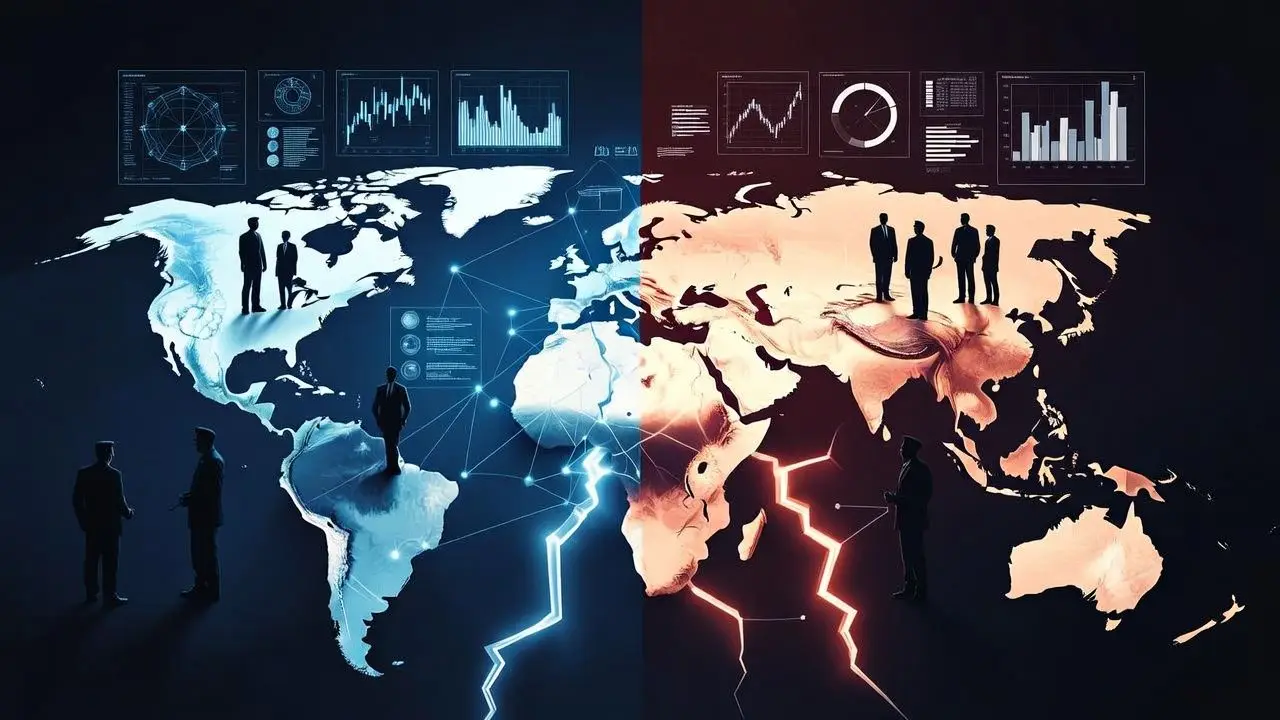
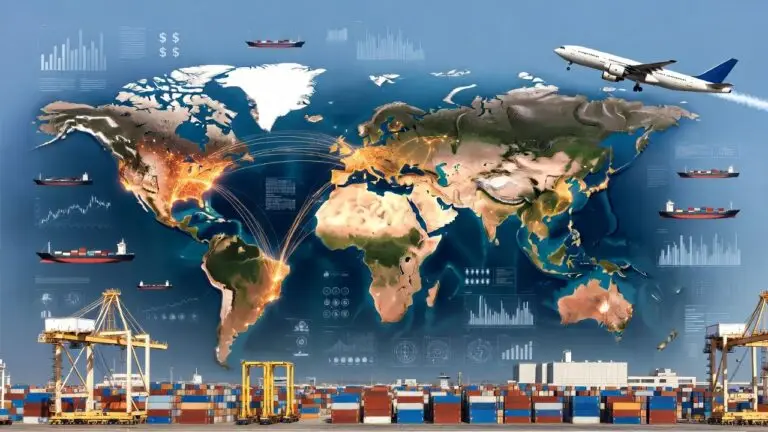
Global risks escalate as major powers compete for dominance across multiple domains.
Economic fragmentation replaces decades of globalization and integrated markets.
Military tensions increase in flashpoint regions from Taiwan to Eastern Europe.
Technology wars divide the world into competing digital ecosystems.
Climate change impacts worsen while international cooperation weakens significantly.
These global risks threaten prosperity and peace accumulated over previous generations.
Economic Fragmentation Accelerates
Supply chains reorganize along geopolitical rather than efficiency lines. Companies choose locations based on political allegiances instead of costs. This friend-shoring approach increases prices for consumers worldwide dramatically.
Trade blocs form around competing powers excluding rivals systematically. China-led and Western-aligned economic zones operate with minimal interaction. Global commerce becomes more complicated and expensive for everyone.
Currency wars intensify as nations weaponize financial systems strategically. Dollar dominance faces challenges from digital yuan and alternative systems. Payment networks split along political boundaries reducing transaction efficiency.
Military Tensions Reach Critical Levels
Taiwan Strait remains the world’s most dangerous potential flashpoint. Chinese military capabilities grow while U.S. commitments face domestic scrutiny. Miscalculation risks increase as both sides conduct regular operations.
Eastern Europe tensions persist despite temporary ceasefires or agreements. NATO expansion debates continue dividing Western allies on strategy. Russia maintains military pressure on multiple borders simultaneously always.
South China Sea disputes involve multiple nations claiming overlapping territories. Naval incidents occur regularly as powers assert competing claims. Freedom of navigation operations increase tensions without resolving disagreements.
Technology Competition and Global Risks
Artificial intelligence development happens in isolated national ecosystems increasingly. Chinese and Western AI systems advance separately with different values. This divergence creates incompatible technology standards complicating global business.
Semiconductor supply chains become weapons in geopolitical competition actively. Export controls limit chip access based on political considerations. Technology decoupling forces companies to maintain duplicate production systems.
Cybersecurity threats multiply as state actors weaponize digital infrastructure. Critical systems face constant attacks from sophisticated adversaries everywhere. Digital sovereignty demands increase costs and reduce internet openness.
Climate Cooperation Collapses
International climate agreements weaken as nations prioritize immediate economic interests. Financing disputes prevent cooperation between developed and developing countries. Temperature targets become increasingly unrealistic without coordinated global action.
Extreme weather events increase frequency and severity across continents. Floods, droughts, and hurricanes displace millions annually from homes. Climate migration creates political instability in receiving and sending regions.
Green technology races create winners and losers in energy transition. Countries controlling critical minerals and manufacturing gain strategic advantages. Climate action becomes another arena for great power competition.
Food and Water Security Threats
Agricultural production faces disruptions from weather and geopolitical tensions. Export restrictions during crises create cascading global shortages rapidly. Food prices spike affecting poorest populations most severely always.
Water scarcity affects billions as rivers and aquifers deplete faster. International water disputes risk military conflict in stressed regions. Desalination and infrastructure require investments many nations cannot afford.
Fertilizer and agricultural input costs remain elevated from supply disruptions. Farmers worldwide struggle with profitability affecting production decisions. Food system vulnerabilities expose dependencies on complex global networks.
Financial System Instability
Debt levels across governments and corporations reach unprecedented heights. Interest rate increases make servicing existing debt increasingly difficult. Default risks spread through interconnected financial systems creating contagion.
Banking crises erupt periodically as institutions face liquidity problems. Confidence evaporates quickly when problems emerge at major banks. Government interventions prevent collapses but create moral hazard issues.
Cryptocurrency volatility and failures undermine alternative financial system credibility. Regulatory uncertainty prevents mainstream adoption despite technological promise. Digital finance remains fragmented and risky for most users.
Pandemic Preparedness Failures
COVID-19 lessons fade as nations reduce public health investments. Surveillance systems and response capabilities deteriorate from budget cuts. New disease threats emerge with inadequate international coordination mechanisms.
Vaccine nationalism returns whenever new health threats appear suddenly. Wealthy nations secure supplies while poor countries wait indefinitely. This inequity prolongs global health crises and enables mutations.
Misinformation about health threats spreads faster than accurate information. Public trust in institutions erodes making emergency responses ineffective. Polarization extends even to basic public health measures unfortunately.
Social and Political Polarization
Domestic political divisions within nations reach historic intensity levels. Compromise becomes impossible as extremes dominate political discourse completely. Democratic institutions weaken under pressure from populist movements everywhere.
Misinformation campaigns exploit divisions worsening social cohesion dramatically. Foreign actors amplify domestic tensions through coordinated disinformation operations. Truth becomes contested making shared reality increasingly difficult.
Inequality grows as economic benefits concentrate among small elites. Middle classes shrink in developed nations creating political instability. Frustration fuels radical movements challenging established systems and norms.
Migration and Refugee Pressures
Climate disasters and conflicts displace record numbers of people. Receiving countries struggle with integration and resource allocation challenges. Anti-immigrant sentiment grows complicating humanitarian responses to crises.
Border controls tighten globally as nations prioritize security over openness. Legal immigration pathways narrow forcing more dangerous irregular crossings. Human trafficking operations exploit desperate migrants seeking better lives.
What Individuals Can Do
Diversify investments across geographies and asset classes for protection. Single-country or single-currency exposure carries excessive risk currently. Financial resilience requires spreading risk intelligently and deliberately.
Build community connections and local support networks for resilience. Global systems may fail but local relationships provide security. Strong communities weather crises better than isolated individuals always.
Stay informed through multiple reliable sources avoiding echo chambers. Understanding risks enables better preparation and decision-making processes. Critical thinking skills become essential for navigating information chaos.
Conclusion
Global risks in 2026 reflect fundamental shifts in international order. Competing powers create divisions replacing cooperation and integration systems. These challenges require individual adaptation and collective wisdom simultaneously.
Pessimism paralyzes while blind optimism ignores reality dangerously both. Realistic assessment of risks enables appropriate preparation and responses. The divided world demands resilience, flexibility, and strategic thinking constantly.