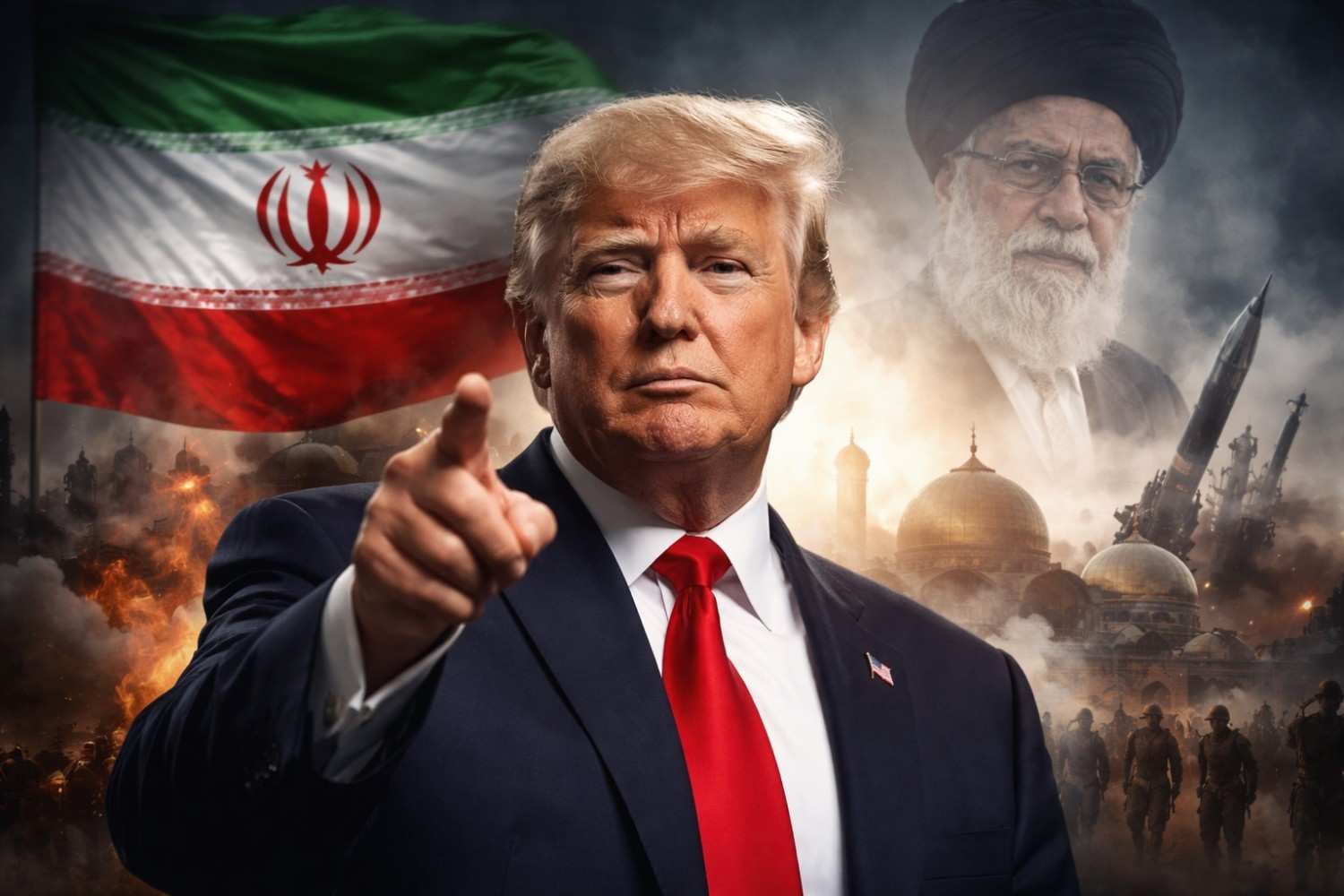
The Iran supreme leader successor race has begun. Ayatollah Ali Khamenei is dead. He ruled Iran for 36 years with an iron fist. On February 28, 2026, a joint US-Israeli airstrike on his Tehran compound ended that era. Within hours, President Trump told NBC News he already knows who may take over. The world is watching closely.
This is not just about Iran. Rather, it is a moment that could reshape the entire Middle East — and redefine how America deals with the region for years to come.
Iran Supreme Leader Successor Process: How It Works
Iran’s constitution spells out how a new supreme leader gets chosen. The job falls to the Assembly of Experts. That is an 88-member body of senior clerics chosen by Iranian voters.
However, the switch does not happen overnight. Until the assembly picks someone, a three-member council runs things. That council includes Iran’s president, the head of the judiciary, and a jurist from the Guardian Council. In other words, President Masoud Pezeshkian is now one of three people steering Iran while the succession plays out.
The big problem is this — the airstrikes may have wiped out much of the Assembly of Experts itself. Furthermore, Khamenei never named a public successor. That was a deliberate choice to protect his own grip on power. Now it has left Iran with a dangerous leadership gap.
Trump Claims He Knows the Iran Supreme Leader Successor
Trump dropped a bombshell during a phone call with NBC News on the day of the strikes. “The people that make all the decisions, most of them are gone,” he said. He added that a large number of Iran’s top leaders had been killed — though he would not name them.
More strikingly, Trump said he already has a good idea who the Iran supreme leader successor will be. He did not say the name out loud. Still, the message was clear — the US has been watching this very closely for a long time.
That claim holds real weight. According to the New York Times, Khamenei had secretly picked three senior clerics as backup successors. Those names are Gholam-Hossein Mohseni-Eje’i, Asghar Hejazi, and Hassan Khomeini. Hassan Khomeini is the grandson of the Islamic Republic’s founder. Trump’s comment, therefore, was almost certainly not a guess.
Who Are the Candidates?
The Iran supreme leader successor field is large and messy. Each candidate points to a very different future for Iran — and for its ties with the West.
Mojtaba Khamenei — the late leader’s own son — was long seen as a top pick. However, his father reportedly did not want a family handoff. He feared it would look too much like the monarchy the revolution had torn down. Still, Israeli outlet Ynet reported that Khamenei did name his son before dying — a claim Iran’s state media denied.
Hassan Khomeini carries huge symbolic power as the founder’s grandson. He is seen as a moderate with real public support. On the other hand, hardliners blocked him from running for the Assembly of Experts back in 2016. That makes his path to the top very hard.
Ali Larijani is a former parliamentary speaker with decades of experience. He is seen as smart, calm, and respected across Iran’s power structure. Before the strikes, he had already been named acting head of the Supreme National Security Council. That is a big sign of where he stands.
Mohsen Araki and Alireza Arafi are the hardline clerical picks. Either one would mean more of the same — a strict continuation of Khamenei’s approach.
Three Paths for Iran — And None Are Simple
The Council on Foreign Relations laid out three ways this could go. None of them are clean.
The first path is regime continuity. The Assembly of Experts picks a hardline successor and keeps the current system running. This offers short-term calm. However, CFR analysts warn it would still leave Iran with a broken economy and rising prices. Moreover, any new leader needs time to build real authority — and that gap creates risk.
The second path is a military takeover by the Islamic Revolutionary Guard Corps. According to CNN, US intelligence sees this as the most likely near-term outcome. The IRGC is the true power behind Iran’s government. As CFR put it plainly, taking out Khamenei is not the same as regime change — the IRGC is the regime. A military-run Iran might stabilize fast. However, it would almost surely be more hostile to the West, not less.
The third path is what Trump is betting on — regime collapse and a popular uprising. He wrote on Truth Social that Khamenei’s death is “the single greatest chance for the Iranian people to take back their country.” In a video to Iranian citizens, he told them to take cover during the strikes and then “take over your government.” That is a direct call for revolution.
The Regional Fallout Is Already Starting
Even as the Iran supreme leader successor decision hangs open, the fallout from Khamenei’s death is spreading fast. Iran fired back at US military bases, Israel, and other regional targets within hours of confirming his death. Israel, in turn, launched fresh strikes against Iran’s missile systems and air defenses.
Meanwhile, in Karachi, Pakistan, at least nine protesters died after storming the US Consulate. Russia’s Vladimir Putin called the killing a “cynical murder.” Iran’s UN ambassador accused Trump of making up reasons to start a war.
Inside Iran, the split was sharp. According to CNN, some parts of Tehran erupted in celebration. So did Los Angeles — home to the world’s largest Iranian diaspora outside Iran. Pro-regime crowds gathered elsewhere to mourn. That divide shows just how deep the fractures in Iranian society run after decades of hardship and crushed uprisings.
I find that contrast both heartbreaking and hopeful. Real people in Iran have lived under this system their whole lives. Whatever comes next, their voices should matter.
What Comes Next
The Iran supreme leader successor pick will not come fast or easy. As a result, Iran could sit in limbo for weeks or even months. That is a dangerous gap. No single person has the power to stop the fighting, call a ceasefire, or open talks with Washington.
Marko Papic of Clocktower Group said it plainly. “The Iranian economy is soon to be a parking lot unless the next Supreme Leader is more open to dealing with the US.” That pressure will weigh on whoever takes the job — because ordinary Iranians are already at a breaking point.
For Trump, the bet is simple. He thinks removing Khamenei opens the door for Iranians to take back their country. That could work. However, as CFR and other analysts have warned, it could also produce a harder, more hostile Iran led by the IRGC — one that is far tougher to deal with than anything before.
Either way, the Iran supreme leader successor choice is one of the biggest political decisions of this century. Not just for Iran — but for the whole Middle East and beyond.