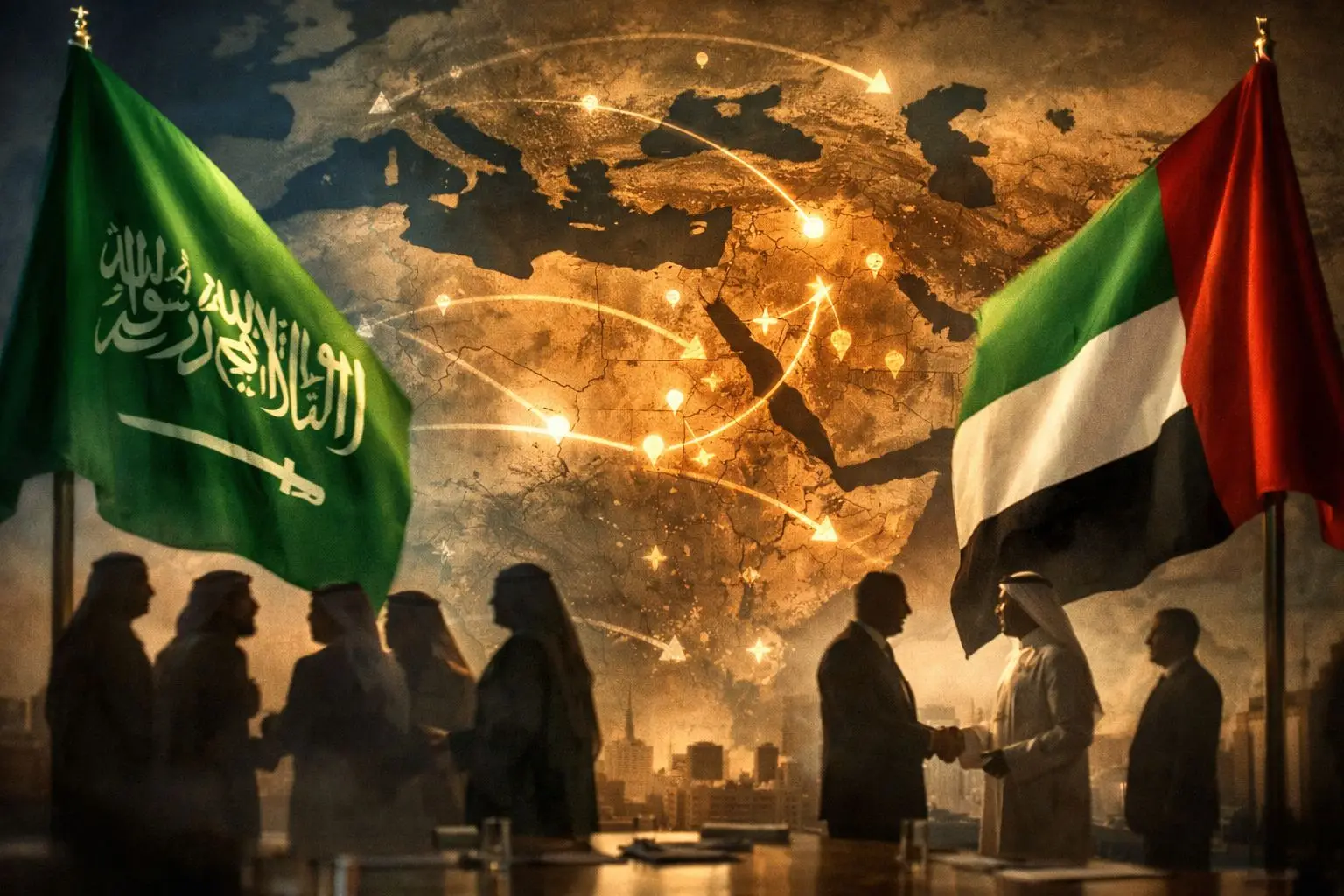
Saudi UAE rivalry intensifies as both nations compete for Middle East dominance. These two Gulf powerhouses pursue conflicting strategies across multiple continents. The Saudi UAE rivalry reshapes alliances from Africa to the Levant with global implications.
From Allies to Competitors
Saudi Arabia and UAE once presented a united Gulf front. Shared security concerns and oil interests bound them together closely. Recent years reveal diverging visions for regional leadership and influence.
Both countries invested heavily in military capabilities and diplomatic networks. Economic diversification strategies put them in direct competition increasingly. National ambitions now outweigh traditional Gulf Cooperation Council unity.
Economic Competition Drives the Rivalry
UAE positions Dubai and Abu Dhabi as global business hubs. The country attracts international companies leaving other regional markets. Tax advantages and infrastructure investment create competitive advantages over neighbors.
Saudi Arabia launches massive projects like NEOM and Riyadh expansion. The kingdom wants to become the region’s economic center instead. Both nations compete for the same foreign investment and talent.
Tourism development creates another battleground between the powers. Saudi Arabia opens to international visitors after decades of restrictions. UAE’s established tourism industry faces new competition from Saudi attractions.
Influence Battles Across Africa
Both countries invest billions in African infrastructure and development projects. Port facilities, agriculture, and energy projects advance competing interests. African nations benefit from Gulf competition while managing complex relationships.
Sudan becomes a key arena for Saudi-UAE strategic competition. Both powers maintain military bases and economic investments there. Sudanese politics reflect the tension between these Gulf backers.
Horn of Africa stability depends partly on Saudi-UAE cooperation or conflict. Somalia, Eritrea, and Ethiopia navigate competing Gulf pressures carefully. Regional peace efforts sometimes suffer from Gulf power plays.
Levant Political Maneuvering
Syria reconstruction offers opportunities for both Gulf powers strategically. Different visions for Syria’s future create tension between them. Assad’s rehabilitation reveals competing Gulf approaches to regional diplomacy.
Lebanon’s political crisis involves Saudi and Emirati influence battles. Both countries support different factions and political outcomes there. Lebanese politics become more complicated by Gulf competition dynamics.
Iraq attracts Saudi and Emirati investment and political engagement. Both seek influence over Iraqi government decisions and policies. Balancing relationships with both Gulf powers challenges Iraqi leadership.
Yemen Conflict Complications
Saudi Arabia leads the Yemen military coalition officially still. UAE withdrew ground forces but maintains significant influence there. Diverging strategies in Yemen reveal deeper Saudi-UAE tensions clearly.
Southern Yemen separatists receive Emirati backing against Saudi preferences. These militias challenge the Saudi-backed government’s authority regularly. Conflict resolution becomes harder when coalition partners pursue different goals.
Technology and Innovation Race
UAE invests heavily in artificial intelligence and space programs. The country wants to lead the region in technology adoption. These investments build soft power and economic diversification simultaneously.
Saudi Arabia pours resources into technology cities and innovation hubs. The kingdom cannot let UAE dominate future technology sectors. Competition accelerates regional technological development despite duplication costs.
Diplomatic Strategy Differences
UAE normalizes relations with Israel ahead of Saudi Arabia. This bold move establishes UAE as a regional diplomatic innovator. Saudi Arabia proceeds more cautiously on controversial regional issues.
Iran policy reveals another split between the Gulf rivals. UAE pursues pragmatic engagement while Saudi Arabia maintains harder stances. Different threat perceptions drive diverging diplomatic approaches to Tehran.
Sports and Soft Power Competition
Both countries use sports to enhance global reputation and influence. Saudi Arabia hosts major boxing matches and golf tournaments now. UAE responds with expanded Formula 1 and cricket investments.
Soft power competition extends to culture, entertainment, and media sectors. International events and concerts choose between Gulf locations increasingly. Global perception battles matter as much as economic competition.
Regional Alliances Shift Accordingly
Smaller Gulf states navigate carefully between Saudi and Emirati interests. Qatar repairs relations with both but maintains independent policies. Oman traditionally avoids taking sides in regional power struggles.
Egypt balances relationships with both Gulf powers while managing economic needs. Egyptian politics reflect influence from both Saudi and Emirati sources. Aid and investment flow requires diplomatic finesse from Cairo.
What This Means for Regional Stability
Competition between Saudi Arabia and UAE creates opportunities and risks. Smaller states gain leverage by playing rivals against each other. However, coordination on security threats becomes more difficult always.
Regional integration suffers when major powers pursue conflicting agendas. Economic efficiency decreases with duplicate infrastructure and competing standards. Gulf unity remains important but increasingly difficult to maintain.
Conclusion
Saudi UAE rivalry defines Middle East power dynamics in 2026. Both nations possess resources and ambition to reshape regional order. Competition between them influences politics far beyond Gulf borders.
The rivalry shows no signs of decreasing in coming years. Each country doubles down on strategies to achieve regional supremacy. Global powers watch carefully as Gulf competition reshapes alliances everywhere.