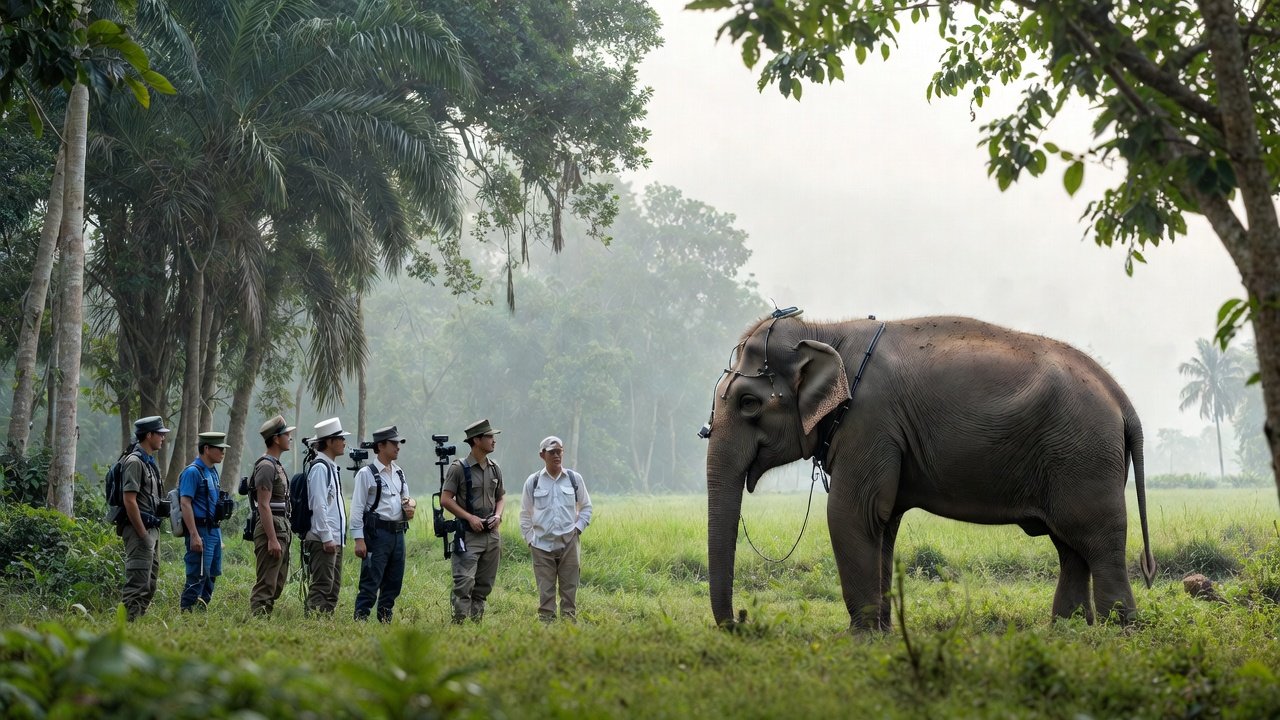
Thailand gives wild elephants birth control to reduce deadly conflicts.
Last year, elephants killed 30 people and damaged 2,000 crops.
A US-made vaccine stops eggs from being fertilized for seven years.
Three wild female elephants received the vaccine in January 2026.
However, conservationists worry this plan hurts elephant populations.
Thailand has 4,400 wild elephants with 800 living near human areas.
Thailand’s elephant birth control program makes headlines worldwide this week. Wild elephants and humans clash more often than ever. Moreover, the elephant birth control vaccine aims to reduce deadly conflicts fast.
Why Thailand Needs This Program
Farmers cut down forests to grow more food. Therefore, elephants lose their natural homes quickly. They wander into villages looking for food instead.
Last year was dangerous for everyone involved. Wild elephants killed 30 people and injured 29 in Thailand. Also, they damaged crops in over 2,000 incidents.
About 800 out of 4,400 wild elephants live near human areas. Furthermore, their birth rate runs at 8.2% yearly. That’s double the national average of 3.5%.
The vaccine doesn’t stop female elephants from ovulating. However, it prevents eggs from being fertilized.
Officers obtained 25 doses of a US-made vaccine. They tested it on seven domesticated elephants first. The two-year trial showed promising results.
Officers used an airsoft gun to give the drug. Also, no anesthesia was needed for the process. This kept both animals and officers safe.
First Wild Elephants Vaccinated
Three female elephants in Namtok Khlong Kaeo National Park got the vaccine. The park sits in Trat province in eastern Thailand.
The vaccine can prevent pregnancy for seven years. However, elephants can reproduce again afterward. They simply need no booster shot after that.
Authorities are now deciding which areas to target next. Moreover, 15 doses remain for future use. Experts will watch the vaccinated elephants closely throughout.
Sukhee Boonsang leads the Wildlife Conservation Office. He said action is necessary now. “If we don’t act, the impact will become unmanageable,” he warned clearly.
The program also adds water and food sources inside forests. Furthermore, authorities build protective fencing around villages. Rangers also guide stray elephants back to the wild.
Therefore, the vaccine is just one part of a bigger plan. The government wants humans and elephants to coexist peacefully.
Conservation Debate Heats Up
The vaccination drive draws criticism from some experts. They worry it might hurt conservation efforts overall.
Thailand holds elephants sacred as national symbols. The country has a centuries-old tradition of using elephants in farming and transport. Moreover, reducing their numbers feels wrong to many.
However, others argue safety must come first. Thirty deaths in one year is too many. Also, thousands of farmers lose crops yearly from elephant raids.
Some experts prefer habitat protection over birth control. They argue more forest land solves the real problem. Furthermore, elephants wouldn’t enter villages with enough space.
Others support the elephant birth control plan fully. They say it buys time while habitats get restored. Also, it stops deaths without harming existing elephants.
The debate splits wildlife experts into two camps. Therefore, finding a middle ground remains very difficult. Both sides agree that doing nothing is not an option.
Thailand’s Long History with Elephants
Elephants hold deep cultural meaning in Thailand. They appear on ancient temples and royal symbols. Moreover, Thai people feel a strong bond with them.
This makes the birth control debate even harder. Nobody wants to harm these beloved animals at all. However, nobody wants more people to die either.
Therefore, the government must balance culture with safety. This is not a simple problem to fix. Furthermore, it requires careful thought and broad support.
What Happens Next
Authorities watch the three vaccinated elephants closely now. They track behavior, health, and herd dynamics carefully. Also, scientists record all data for future decisions.
If results stay positive, more vaccines will follow. However, the remaining 15 doses cover only a small area. Furthermore, Thailand needs more vaccines and more funding soon.
The program could become a global model for wildlife management. Other countries face similar human-wildlife conflicts too. Moreover, Thailand’s approach shows a new way forward.
Thailand’s elephant birth control plan tackles a serious problem. People and elephants cannot keep clashing without consequences. Moreover, both lives and livelihoods need better protection now.
The vaccine offers a smart and humane solution. However, it must work alongside habitat restoration efforts. Therefore, real success needs a full and long-term strategy.
The world watches Thailand’s bold experiment with great interest. Also, the results will shape wildlife management globally. Protecting both humans and animals starts with brave new ideas.