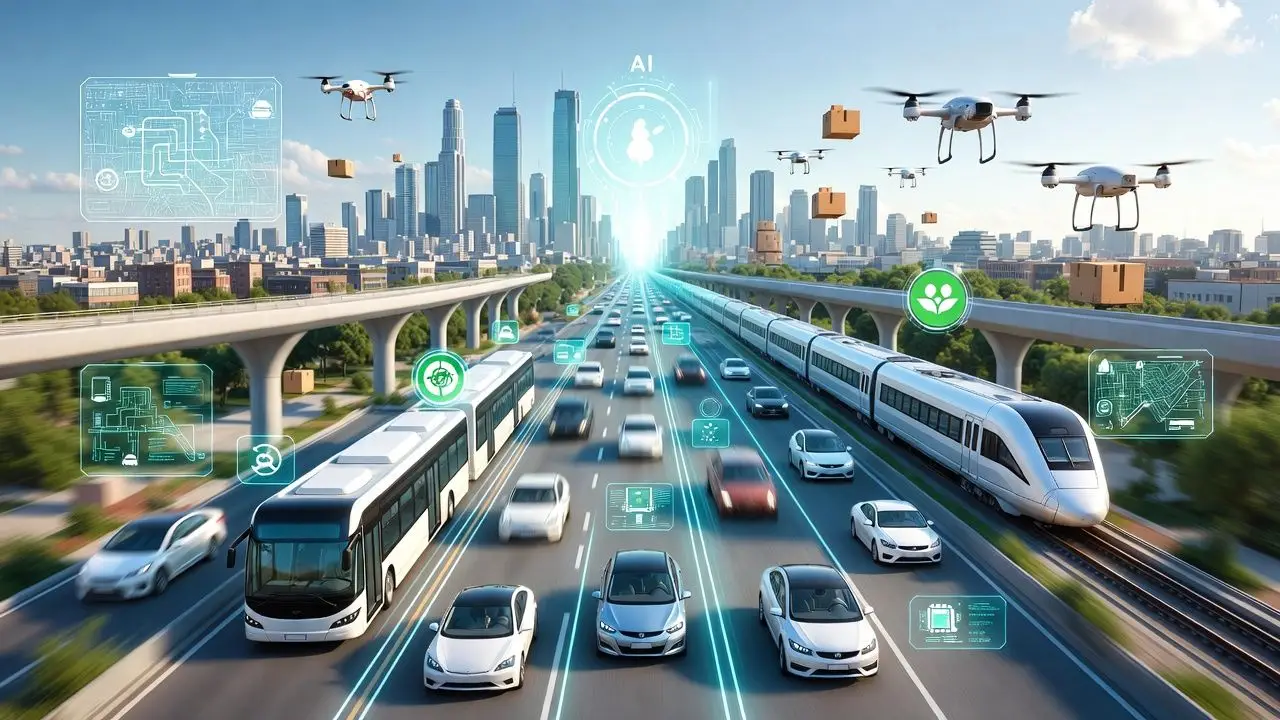
The transportation revolution isn’t coming. It’s here. Autonomous trucks save FedEx $200 million annually. Amazon’s self-driving fleet cut emissions 35%. EVs crossed 20% global market share.
These aren’t pilot programs anymore. They’re operational reality reshaping trillion-dollar industries.
Autonomous Vehicles Scale Commercially
Waymo now operates robotaxis in San Francisco, Phoenix, Los Angeles, Austin, and Atlanta. Over 250,000 paid rides happen weekly across these cities. Anyone with the app can use the service.
Level 3 autonomous vehicles are available for purchase right now in 2026. Mercedes, BMW, and others sell cars with hands-off, eyes-off driving capability. Level 4-5 vehicles arrive commercially by 2028-2030.
Current data shows autonomous vehicles have 40% fewer accidents than human drivers. Safety records keep improving as technology advances.
FedEx deployed autonomous trucks for long-haul logistics. The company saves over $200 million annually. Amazon incorporated autonomous trucks regionally. Carbon emissions dropped 35%.
Heavy-duty autonomous vehicles transitioned from trials to commercial deployment. Logistics, mining, ports, and long-haul transport all use them now.
Electric Vehicles Hit Critical Mass
EV adoption crossed the 20% global market share threshold in 2025. This marks a critical tipping point. Early majority adoption replaces early adopter purchasing.
Alternative fuel solutions like hydrogen gain traction for heavy-duty applications. The focus shifted from speed and convenience to sustainability and environmental impact.
Electrification extends beyond passenger cars. Commercial fleets, public transit, and logistics companies all convert to electric powertrains. Priorities pivot industry-wide.
Mobility-as-a-Service Transforms Cities
MaaS platforms integrate ride-hailing, public transit, bike and scooter sharing into unified services. Subscription-based access models replace pay-per-ride paradigms.
Corporate MaaS solutions help companies offer employees flexible commuting options. Subscription-based mobility budgets provide alternatives to company cars.
North America leads MaaS adoption, capturing 33.5% of global revenue by 2035. Digital transport policies, investment, and 5G infrastructure enable this growth.
User preferences trend toward flexibility and convenience, particularly in urban areas. This influences city planning and reduces private car ownership reliance.
Last-Mile Delivery Robots Mature
The autonomous last-mile delivery market grows from $28.5 billion in 2025 to $163.45 billion by 2033. That’s 24.4% compound annual growth.
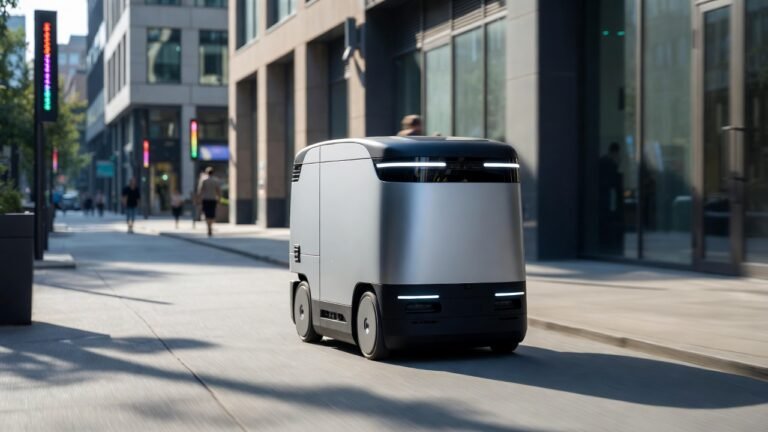
Delivery robots expand from $795.6 million in 2025 to $3.24 billion by 2030. They cut delivery costs by 96%, from $1.60 to $0.06 per delivery.
Gartner projects over 1 million drones delivering retail goods by 2026, up from 20,000 recently. Wing completed over 500,000 residential deliveries across three continents. They plan expansion to 100 additional Walmart stores.
Sidewalk robots like Starship and Amazon Scout enable faster contactless deliveries. Post-pandemic demand accelerated adoption dramatically.
AI Agents Coordinate Transportation Systems
The agentic AI market in smart mobility surges from $3.51 billion in 2025 to $13.65 billion by 2030. That’s 31.25% annual growth.
AI agents perceive environments, analyze sensor information, and make autonomous decisions. They become the intelligence layer connecting vehicles, infrastructure, and passengers.
Future coordinated movement means your car agent talks to the city’s traffic agent and parking agent. These systems optimize routing in real-time across entire networks.
AI processes large datasets to identify demand patterns, predict peak usage, and adjust fleet positioning. Machine learning enables dynamic optimization.
Connected Vehicle Infrastructure
5G/IoT sensors on vehicles and at stations provide live location and fleet status. High-speed communication networks support real-time data exchange.
Sensors, cameras, and connected devices monitor traffic flows and optimize transit routes continuously. Digital infrastructure investments enable advanced telematics.
Texas built America’s first autonomous trucking corridor spanning 21 miles. Smart roads fitted with sensors monitor real-time traffic and road conditions. Connected vehicles receive advisories and incident alerts.
Advanced Driver Assistance Systems
ADAS rapidly shifts from premium to standard equipment. Regulations and consumer demand accelerate adoption. Safety features once reserved for luxury cars appear in mainstream vehicles.
Insurance companies offer discounts for advanced safety features. Autonomous vehicles crash less, cost less to maintain, and achieve better fuel efficiency.
The technology follows typical innovation pricing curves. Insanely expensive at launch, reasonable within a decade.
Public Acceptance Challenges
Despite technological advances, widespread deployment hinges on public acceptance and trust. In 2023, 68% of survey respondents reported being afraid of AVs.
People worry about how AVs handle jaywalkers, construction zones, and bad weather. Wide acceptance requires clear communication about how technology works.
Consistent safety records proving AVs can be trusted as transportation options matter most. Data transparency builds confidence gradually.
Regulatory Progress Varies
The UN works on new autonomous vehicle regulations expected by mid-2026. These will be critical for wider adoption globally.
Hamburg expects fully driverless public transport services in 2026. Stellantis and Pony.ai partnered to develop Level 4 autonomous vehicles for Europe. Testing begins in Luxembourg, with broader deployment following.
Despite progress, regulatory clarity remains incomplete. Local initiatives currently allow self-driving cars on roads. Comprehensive frameworks are still developing.
Multimodal Last-Mile Solutions
Last-mile operators pioneer bold approaches blending traditional motorized fleets with cargo bikes, on-foot delivery, sidewalk robots, and aerial experiments.
This creates new route planning challenges requiring optimization across multiple transportation modes. Complex routes combine driving, parking, and walking.
Operations become sophisticated quickly. Technology enables coordination impossible just years ago.
The Cybersecurity Challenge
The rapid convergence of information and operational technologies creates new cyber threats. Transportation planners and policymakers face increasingly sophisticated attacks.
Connected vehicle-infrastructure ecosystems require robust security. Single vulnerabilities can cascade across entire networks.
Cybersecurity shifted from IT problem to fundamental operational requirement. Every connected system needs protection from design, not as afterthought.
What Separates Winners from Losers
Leaders integrate AI as operational partner. They transform high-quality data into competitive advantage. This separates them from laggards.
Fleets need cohesive operational strategies delivering lower costs, higher efficiency, and competitive advantage. Technology alone isn’t enough without strategy.
The ability to execute innovation determines success. Pilots and experiments must scale to mature, robust systems.
The Bottom Line
Transportation in 2026 isn’t about incremental improvements. It’s about fundamental transformation across every mode.
Autonomous vehicles, electric powertrains, connected infrastructure, AI coordination—these aren’t separate trends. They’re converging into entirely new systems.
The changes happening now set the stage for decades ahead. Efficiency and sustainability become inextricably linked. Real-time data and digital transformation drive the sector forward.
The future of transportation is clear. It’s electric, autonomous, connected, and intelligent. And it’s arriving faster than most expected.