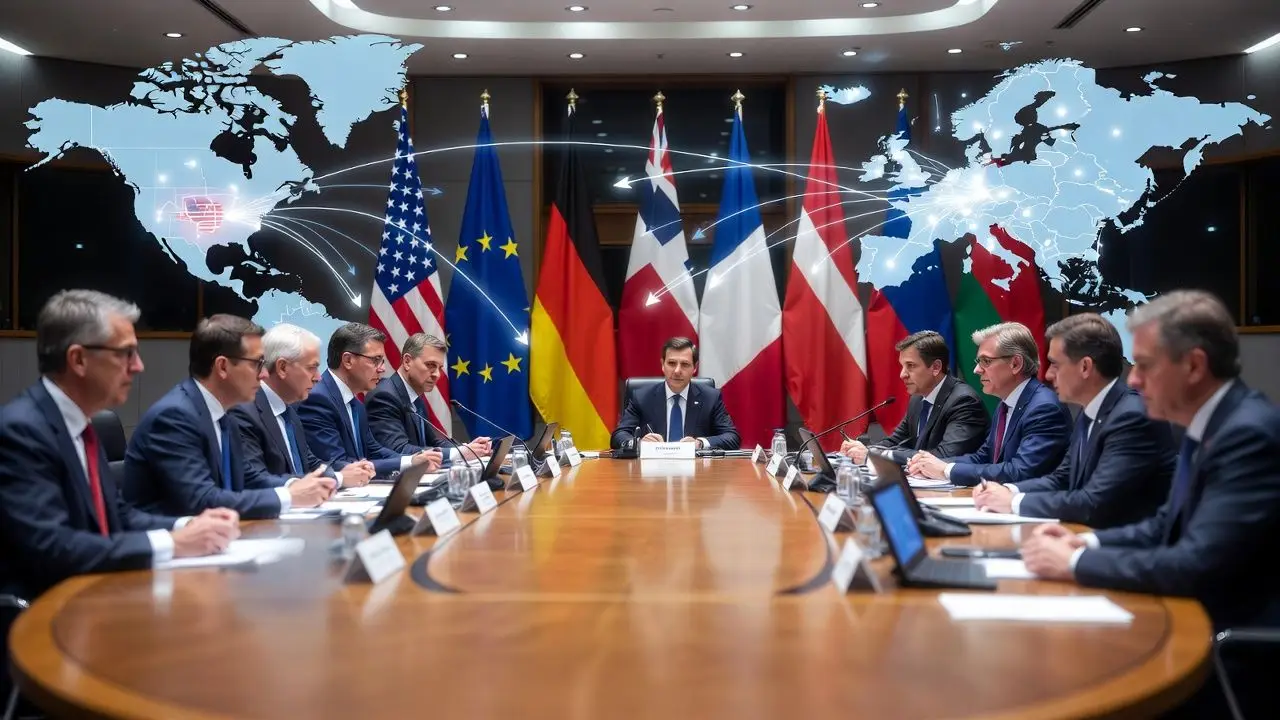
Transatlantic relations face unprecedented strain as America and Europe diverge on priorities. The Munich Security Conference reveals deep disagreements over defense, trade, and strategy. These transatlantic relations challenges reshape the Western alliance built over seven decades.
Munich Security Conference Reveals Divisions
European leaders openly question American commitment to continental security during conference debates. U.S. representatives demand higher European defense spending without compromise or flexibility. The atmosphere reflects frustration rather than partnership unity traditionally displayed.
Trade disputes dominate informal discussions between American and European delegations privately. Tariffs and protectionist measures strain economic ties that once bound allies. Commercial interests increasingly override security cooperation arguments from both sides.
China policy differences emerge as major source of transatlantic friction publicly. Europeans resist decoupling from Chinese markets despite American pressure intensely. Economic dependencies make European alignment with U.S. positions politically difficult.
Defense Spending Disputes Continue
NATO’s two percent GDP spending target remains unfulfilled by most members. American politicians threaten reduced commitments if Europeans fail to increase contributions. European leaders cite economic constraints and different security priorities as justification.
Germany’s defense budget increases satisfy neither American expectations nor domestic critics. The spending rises gradually but falls short of transformational change demanded. Political coalitions struggle to balance fiscal responsibility with security requirements.
France advocates for European strategic autonomy independent of American leadership increasingly. Paris argues Europe must defend itself without relying on Washington. This position alarms smaller NATO members dependent on American guarantees.
Energy Security Disagreements
European nations diversify energy sources after Russian supply disruptions previously experienced. American liquefied natural gas becomes important but insufficient for European needs. Green energy transitions proceed at different speeds across Atlantic creating friction.
Nuclear energy debates divide Europeans internally and from American positions simultaneously. France and some nations expand nuclear while Germany phases it out. U.S. support for nuclear renaissance conflicts with some European green movements.
Pipeline politics complicate transatlantic energy cooperation despite shared interests theoretically. American sanctions on energy projects anger European governments seeking autonomy. Energy policy becomes another arena for alliance tensions unnecessarily often.
Technology and Digital Regulation
European Union’s strict technology regulations frustrate American tech companies significantly. Data privacy rules and antitrust actions target primarily U.S. corporations disproportionately. Silicon Valley views Brussels as hostile to innovation and competition.
Artificial intelligence governance approaches differ fundamentally across the Atlantic completely. Europe prioritizes safety and ethics while America emphasizes innovation speed. Regulatory divergence creates compliance nightmares for multinational technology firms operating globally.
Digital sovereignty concerns drive European desire for independent technology capabilities fully. Reliance on American cloud services and platforms feels strategically vulnerable increasingly. However, European alternatives struggle to compete with established American giants.
Ukraine Support Fatigue Emerges
European military aid to Ukraine continues but faces growing domestic resistance. Voters question indefinite commitments as conflict drags without resolution visible. Economic costs of supporting Ukraine strain European budgets and patience.
American political divisions create uncertainty about continued Ukraine assistance reliability. European allies cannot depend on consistent U.S. policy across administrations. This uncertainty forces Europe to consider independent support capabilities urgently.
Reconstruction costs for Ukraine will exceed hundreds of billions of dollars. Debates over who pays what percentages create transatlantic tension preemptively. Neither side wants to shoulder disproportionate financial burdens for rebuilding.
Trade and Economic Competition
Subsidy wars emerge as both sides support domestic industries through government spending. American Inflation Reduction Act disadvantages European manufacturers competitively significantly. Europe responds with its own industrial subsidies risking trade war escalation.
Buy American provisions exclude European companies from U.S. government procurement opportunities. These protectionist measures violate spirit of alliance partnership Europeans argue. Retaliation threats hang over transatlantic commercial relationships constantly now.
Currency policies create additional friction as dollar strength hurts European exports. Federal Reserve decisions impact European economies without European input or consideration. Monetary policy coordination decreases as interests diverge between continents.
Climate Policy Coordination Breaks Down
Paris Agreement implementation approaches differ dramatically across the Atlantic noticeably. Europe pursues aggressive carbon reduction while America proceeds more gradually. Climate leadership disputes undermine cooperation on other shared challenges.
Carbon border adjustments proposed by EU threaten American exports potentially significantly. These measures protect European industries but anger American producers facing costs. Trade and climate policies become entangled complicating both policy areas.
Migration and Border Control
European migration pressures reduce willingness to accept refugees from American foreign policies. Wars and instability partly caused by U.S. actions create European refugee burdens. This dynamic breeds resentment and demands for burden sharing.
Border security cooperation faces complications from differing legal frameworks and priorities. Information sharing and joint operations require trust eroding between partners. Security partnerships suffer when political relationships deteriorate between allies.
What This Means for Global Order
Western unity no longer guaranteed in confronting authoritarian challenges from China and Russia. Adversaries exploit transatlantic divisions undermining collective Western influence globally significantly. Alliance credibility depends on demonstrating solidarity despite disagreements internally.
Other nations watch closely to assess Western reliability as partners long-term. Declining transatlantic cooperation signals potential realignment opportunities for fence-sitters. The liberal international order requires functional U.S.-Europe partnership fundamentally always.
Future of the Alliance
Transatlantic relations require fundamental renegotiation recognizing changed circumstances honestly. Cold War era assumptions no longer reflect current geopolitical realities or priorities. Both sides must adapt or risk alliance irrelevance or dissolution.
Younger generations on both continents view the partnership less sentimentally than elders. Historical bonds matter less than current interests for millennial and Gen Z leaders. The alliance must prove relevant to new generations or fade away.
Conclusion
Transatlantic relations enter turbulent period testing alliance foundations built over decades. Munich Security Conference discussions reveal extent of U.S.-Europe divergence clearly now. Whether partners can bridge differences determines Western influence in coming years.
The alliance survived previous challenges through compromise and shared purpose ultimately. Current tensions require similar wisdom and flexibility from both sides equally. Failure to adapt threatens not just the partnership but global stability.