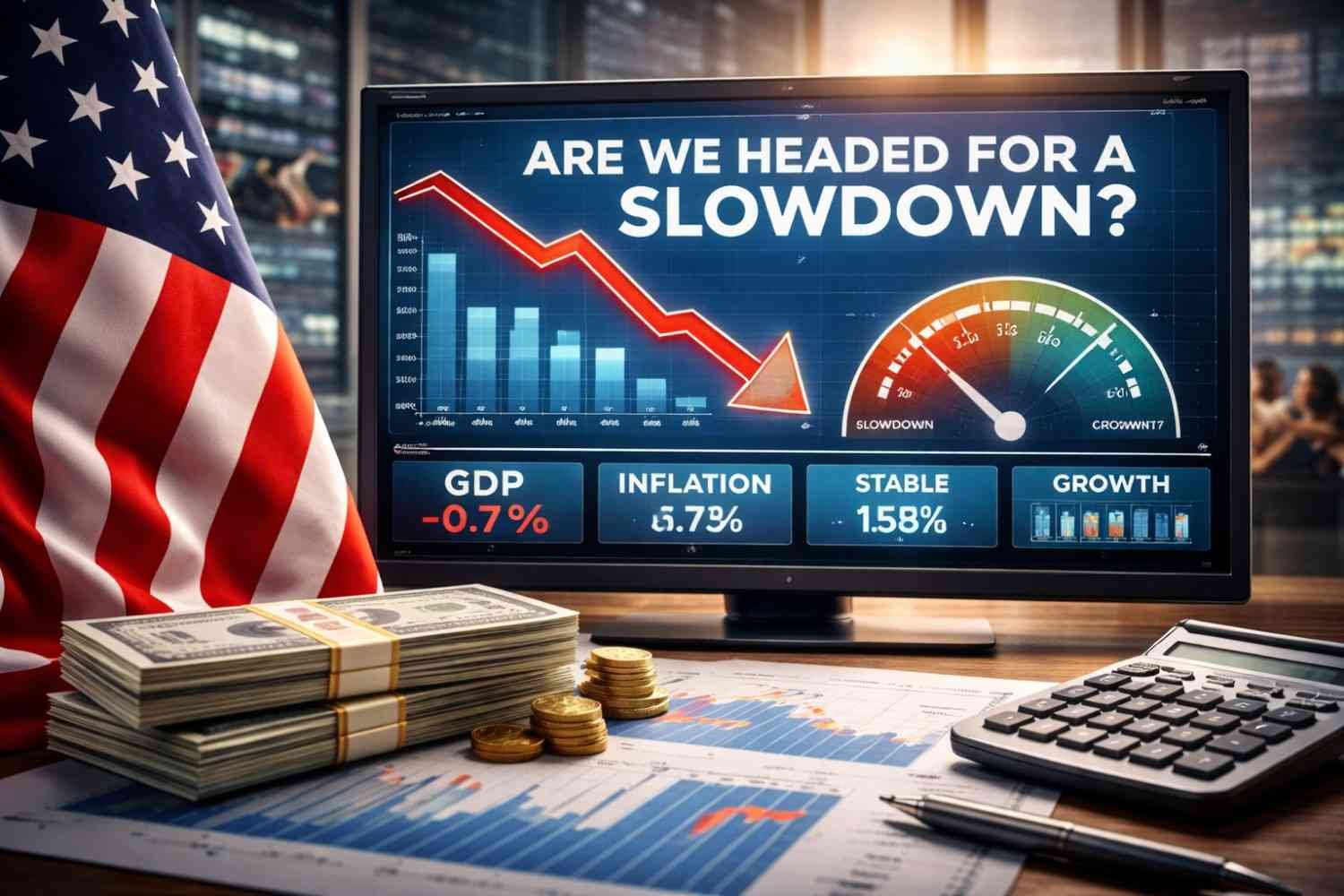
The U.S. bond market is sending a clear message. Something is changing in the American economy. Investors are paying close attention.
Retail sales fell flat in December 2025. Consumers stopped spending. The holiday shopping season disappointed economists. This unexpected slowdown triggered major movements in financial markets.
The Numbers Tell a Worrying Story
December retail sales came in at zero growth. Economists expected a 0.4% increase. Instead, they got nothing. The Commerce Department released these figures on February 10, 2026.
This marked a sharp contrast from November’s 0.6% gain. Consumer spending momentum vanished. The core control group, which feeds into GDP calculations, actually fell 0.1%.
The report was delayed due to the 43-day government shutdown. When it finally arrived, it shocked Wall Street. Bond yields immediately dropped.
Bond Yields Drop Sharply
The 10-year Treasury yield plummeted to 4.14%. This represents a significant fall from earlier levels. At the start of 2026, yields hovered around 4.30%.
Bond yields and prices move in opposite directions. When yields fall, bond prices rise. Investors rushed to buy bonds after seeing the retail sales data.
The 2-year Treasury yield also declined. Short-term bonds are especially sensitive to Federal Reserve policy expectations. The yield curve is beginning to steepen.
What Bond Markets Are Saying
Lower bond yields signal several important things. First, investors expect slower economic growth ahead. Second, they’re anticipating Federal Reserve interest rate cuts. Third, they’re seeking safety in government bonds.
The bond market is essentially betting on a weaker economy. This contradicts the “higher for longer” narrative that dominated 2025. Market sentiment is shifting rapidly.
Professional investors watch bond yields closely. These yields affect everything from mortgage rates to corporate borrowing costs. They’re considered a barometer of economic health.
The Federal Reserve’s Dilemma
The Federal Reserve now faces tough choices. Inflation remains above the 2% target. But economic growth is clearly slowing.
Market expectations changed dramatically after the retail sales report. The CME FedWatch Tool tracks Federal Reserve rate cut probabilities. Before the report, markets priced in a 35% chance of a March rate cut.
After the report, that probability jumped to 68%. Traders now expect the Fed to act quickly. Money markets are pricing in three quarter-point rate cuts during 2026.
This would bring the federal funds rate down significantly. The current target range sits at 4.25% to 4.50%. Three cuts would lower it to 3.50% to 3.75%.
Why Retail Sales Matter So Much
Consumer spending drives the U.S. economy. It accounts for more than two-thirds of economic activity. When consumers stop spending, growth slows.
The December retail sales report showed weakness across multiple categories. Furniture stores saw sales drop 0.9%. Clothing and accessories fell 0.7%. Electronics and appliances declined 0.4%.
Even online retail barely grew. E-commerce sales rose just 0.1%. This is particularly notable given the shift toward online shopping.
Only building materials and garden centers showed strength. They gained 1.2%. But this wasn’t enough to offset weakness elsewhere.
The K-Shaped Economy
Economists increasingly describe the current situation as a “K-shaped economy.” High-income consumers continue spending. Middle and lower-income consumers are pulling back.
Data from the Federal Reserve Bank of New York confirms this trend. College graduates’ retail spending rose 6% from January 2023 to December 2025. Non-graduates’ spending increased only 4%.
This divergence matters because middle-income consumers represent a larger share of total spending. If they reduce purchases, the overall economy slows.
Walmart thrives because it offers everyday low prices. Higher-end retailers struggle. The gap between winners and losers is widening.
Consumer Confidence Hits Multi-Year Lows
Consumer confidence declined sharply in January 2026. It reached the lowest level since 2014. Americans are increasingly worried about their financial prospects.
High prices continue to squeeze household budgets. Even though inflation has moderated from its 2022 peaks, prices remain elevated. Consumers feel the pinch every time they shop.
Job market concerns are also growing. Hiring slowed significantly in late 2025. December added only 50,000 jobs. November saw 56,000 new positions.
These numbers are well below the robust job growth seen in 2023 and early 2024. The labor market is cooling.
Tariff Impact on Consumer Behavior
Tariffs implemented in 2025 affected consumer spending patterns. Import duties on goods from major trading partners increased prices. Consumers noticed.
The effective tariff rate approached 12% by late 2025. Some estimates suggest it could climb to 14.4%. This depends on negotiations and consumer behavior.
Tariffs hit specific categories hard. Autos, home furnishings, appliances, and clothing all faced higher costs. Consumers shifted spending away from these items.
Chris Zaccarelli, chief investment officer at Northlight Asset Management, noted the obvious trend. “Consumer spending has finally caught up with consumer sentiment, and not in a good way,” he wrote.
For months, consumer confidence surveys showed pessimism. Yet people kept spending. That disconnect finally ended in December.
Bankruptcy Filings Rise
Retail bankruptcies are increasing. Eddie Bauer filed for Chapter 11 protection in February 2026. The company operates roughly 180 stores across the U.S. and Canada.
Management blamed declining sales and industry headwinds. The parent company of Saks Fifth Avenue also sought bankruptcy protection. Rising competition and massive debt proved too much.
These aren’t isolated incidents. Multiple retailers are closing stores. Some are reorganizing under bankruptcy protection. Others are simply shutting down unprofitable locations.
The retail landscape is changing. Consumers have less discretionary income. They’re more selective about purchases. Weaker retailers can’t compete.
What This Means for Stock Markets
Falling bond yields have mixed implications for stocks. On one hand, lower yields increase the present value of future corporate earnings. This benefits growth stocks, especially in technology.
Tech stocks often trade at high valuations based on future earnings. When the risk-free rate (Treasury yields) falls, these stocks become more attractive.
Real estate investment trusts also benefit from lower rates. Their dividend yields become more competitive compared to bonds.
However, falling yields also signal economic weakness. If consumer spending continues to slow, corporate profits will suffer. This would hurt stock prices.
The S&P 500 consumer discretionary sector already shows strain. It rose only 0.7% in the fourth quarter of 2025. This compares poorly to gains of 42% in 2023 and 30% in 2024.
Historical Parallels
Financial market historians see familiar patterns. Late 2018 experienced a similar growth scare. Consumer spending weakened. Bond yields fell. The Federal Reserve responded with rate cuts.
The pre-pandemic period of 2019 also showed similarities. Economic data softened. Markets anticipated Fed action. Rate cuts eventually arrived.
These precedents suggest the Federal Reserve often reacts aggressively once consumer data turns negative. Chair Jerome Powell has emphasized data dependency. Weak retail sales qualify as important data.
Corporate Response to Falling Yields
Chief financial officers at major corporations are taking notice. Lower long-term interest rates create opportunities. Companies can lock in borrowing costs before the next bout of volatility.
Debt refinancing activity is increasing. Corporations want to replace higher-cost debt with cheaper loans. This improves their balance sheets and boosts profitability.
The investment-grade corporate bond market is active. Companies are issuing new debt. Investors are eager to buy it. Credit spreads remain near multi-decade lows.
This suggests bond investors still have healthy risk appetites. They’re not panicking. But they are repositioning for a different economic environment.
The Yield Curve Steepens
The yield curve measures the difference between short-term and long-term interest rates. A steepening curve means long-term rates are rising relative to short-term rates. Or short-term rates are falling faster.
In this case, short-term rates are dropping quickly. Markets expect Fed cuts soon. Long-term rates are falling more slowly. Investors worry about inflation and government debt supply.
The spread between 2-year and 10-year Treasuries is widening. This typically happens when the Fed is about to ease policy. It’s a normal pattern during economic slowdowns.
Historically, a steep yield curve favors bank profits. Banks borrow short-term and lend long-term. A wider spread means better profit margins.
Government Deficit Concerns
The federal government’s borrowing needs remain substantial. The “One Big Beautiful Bill Act” extended current tax rates. It added new tax cuts. It trimmed spending only modestly.
The Congressional Budget Office estimates this could increase federal debt by $3.4 trillion by 2034. Large deficits mean more Treasury bond issuance.
Increased supply can push yields higher. But right now, demand for safety is overwhelming supply concerns. Investors want the security of U.S. government bonds.
Treasury Secretary Scott Bessent indicated no plans to increase auction sizes for longer maturities. The Treasury will issue more short-term bills instead. This should limit disruption to bond market pricing.
Inflation Still a Factor
Inflation hasn’t disappeared. The Consumer Price Index rose 2.7% in December. This is above the Federal Reserve’s 2% target.
However, the trend is moderating. Core inflation, which excludes food and energy, is also declining gradually. The Fed has made progress on its inflation mandate.
The question is whether the Fed will prioritize fighting inflation or supporting growth. Recent data suggests growth concerns are becoming more pressing.
If consumer spending continues to weaken, inflation will likely cool further. Weak demand reduces pricing power. Companies can’t raise prices if customers won’t pay.
Labor Market Cooling
Job creation has slowed markedly. Weekly jobless claims remain low. This means layoffs aren’t surging. But hiring has clearly decelerated.
White House economic adviser Kevin Hassett noted that U.S. job gains could slow in coming months. Weaker labor force growth and higher productivity explain part of the slowdown.
Immigration policies also affect labor supply. Fewer workers entering the country means less employment growth. An aging demographic compounds this trend.
The unemployment rate ticked up to 4.3%. This is still relatively low historically. But the direction of change matters. Rising unemployment signals economic weakening.
What Investors Should Do
Individual investors face important decisions. Bond yields at current levels offer reasonable income. The Bloomberg U.S. Aggregate Bond Index yields around 4.3%.
This provides a cushion against potential price declines. If yields stay flat, investors earn that 4.3% return. If yields fall further, total returns would be higher.
Investment-grade corporate bonds offer higher yields than Treasuries. But they carry credit risk. In a recession, some companies might struggle to repay debt.
Treasury Inflation-Protected Securities (TIPS) offer another option. They provide protection against unexpected inflation. Real yields (after inflation) on TIPS are positive.
Municipal bonds appeal to high-income taxpayers. Interest from munis is tax-exempt. This enhances after-tax returns.
Duration Considerations
Duration measures how sensitive a bond is to interest rate changes. Longer-duration bonds fluctuate more when yields move. Shorter-duration bonds are more stable.
Financial advisors generally recommend intermediate-term duration. This means an average maturity of five to 10 years. It balances income generation with price stability.
The Bloomberg U.S. Aggregate Bond Index has an average duration of six years. This serves as a reasonable benchmark for most investors.
Aggressive investors might extend duration to capture more gains if yields fall. Conservative investors might shorten duration to reduce volatility.
Alternative Scenarios
Not everyone agrees the economy is weakening significantly. Some analysts point to continued job market resilience. Others note strong corporate balance sheets.
The Atlanta Federal Reserve’s GDPNow tracker showed fourth-quarter growth at 4.2% annualized. This is robust growth. It contradicts the recession narrative.
However, this estimate was calculated before the weak retail sales data. It will likely be revised downward. Consumer spending drives GDP. Weak spending means lower growth.
Another scenario involves inflation re-accelerating. If tariffs push prices higher, the Fed might keep rates elevated. Bond yields could rise instead of fall.
This would hurt bond prices. It would also challenge stock valuations. Higher rates make future earnings less valuable.
The International Context
The U.S. isn’t alone in facing economic uncertainty. China’s regulators reportedly advised financial institutions to limit U.S. Treasury holdings. This reflects geopolitical tensions and concentration risk concerns.
However, U.S. Treasuries remain the world’s safest asset. Global investors still flock to them during uncertain times. This support should keep yields from rising too much.
European economies face their own challenges. The European Central Bank is also considering rate cuts. Global central banks are coordinating their approach.
This synchronized easing could support global growth. But it also confirms that economic momentum is slowing worldwide.
Looking Ahead
The next few weeks will be crucial. January employment data arrives on February 11. Economists expect just 55,000 jobs added. Some prominent firms predict even lower numbers.
Annual revisions to previous employment data are also due. These are expected to show weaker job growth than initially reported. This would reinforce the slowdown narrative.
Inflation data for January will be released soon. If inflation continues moderating, the Fed has more flexibility to cut rates. If it re-accelerates, policy choices become harder.
Corporate earnings season is underway. Company executives will provide guidance for 2026. Their commentary on consumer demand will be revealing.
The Bottom Line
The U.S. bond market is flashing yellow warning lights. Not red, but yellow. The economy is slowing, not collapsing.
Retail sales weakness in December signals that consumers are tapped out. High prices, elevated interest rates, and job market concerns are taking their toll.
Bond yields are falling because investors expect the Federal Reserve to respond. Multiple rate cuts in 2026 seem increasingly likely.
For savers and investors, this creates both opportunities and risks. Bond yields remain attractive. But economic uncertainty requires careful portfolio management.
The next few months will determine whether this is a minor slowdown or something more serious. The bond market is voting for caution.