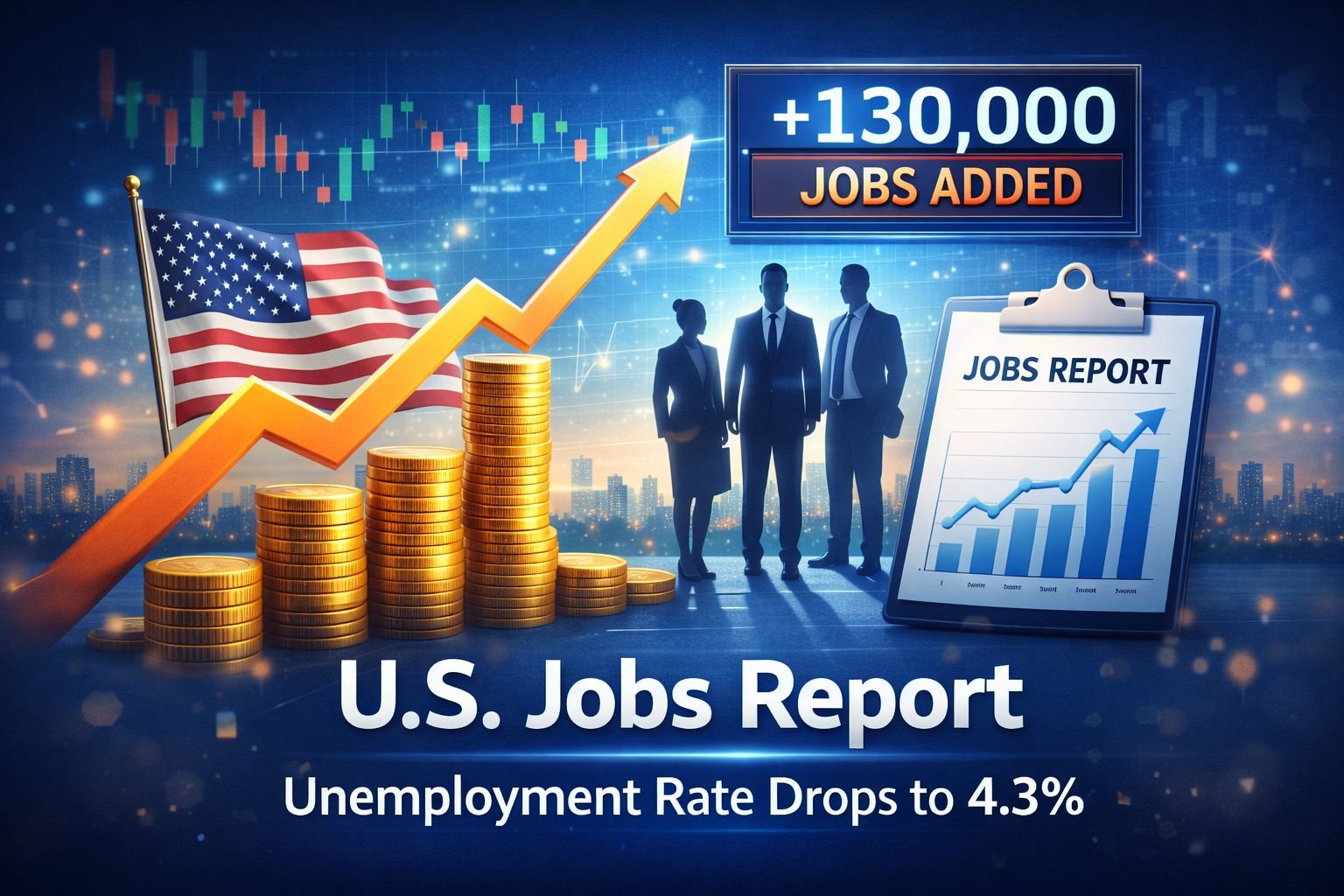
The latest U.S. jobs report shows steady hiring despite broader economic adjustments. U.S. employers added about 130,000 jobs last month. That figure came in stronger than many analysts expected.
At the same time, overall employment figures for late 2024 and 2025 were revised downward. The unemployment rate dropped to 4.3%.
This mixed data paints a complex picture of the U.S. labor market.
Key Highlights from the U.S. Jobs Report
Here are the main takeaways:
130,000 new jobs added last month
Hiring stronger than forecasts
Prior employment numbers revised lower
Unemployment rate declined to 4.3%
The labor market remains active. However, revisions suggest earlier growth may not have been as strong as initially reported.
What the 130,000 Job Gain Means
Adding 130,000 jobs signals continued employer confidence. It suggests businesses are still expanding, even in a changing economic environment.
Economists often view steady monthly gains as a sign of stability. While not explosive growth, the number reflects resilience.
Job gains were spread across several sectors. Service industries and healthcare typically remain key drivers of hiring activity.
Why Were Past Employment Figures Revised?
Revisions are common in labor data. Initial reports rely on early estimates. Later data provides a clearer picture.
In this case, employment figures for late 2024 and 2025 were adjusted downward. This indicates previous job growth may have been overstated.
Revisions do not necessarily signal weakness. They reflect updated information and improved accuracy.
Unemployment Rate Falls to 4.3%
The unemployment rate dropped to 4.3%. This suggests more Americans are working or actively seeking jobs.
A lower unemployment rate can indicate:
Strong labor demand
Stable economic conditions
Continued workforce participation
However, analysts also watch wage growth and labor force participation for a full picture.
Market and Policy Implications
Financial markets closely monitor the U.S. jobs report. Strong hiring can influence interest rate expectations.
If job growth remains steady, policymakers may view the economy as stable. At the same time, downward revisions could encourage caution.
The Federal Reserve often considers employment data when making monetary policy decisions.
Broader Economic Outlook
The latest U.S. jobs report shows balance. Hiring remains solid. Unemployment is relatively low. Yet past revisions highlight slowing momentum.
This combination suggests a cooling but stable labor market. Economists will watch upcoming reports for confirmation.
Final Thoughts
The newest U.S. jobs report delivers mixed but generally positive signals. Employers added 130,000 jobs. The unemployment rate fell to 4.3%. At the same time, earlier job estimates were revised downward.
Overall, the labor market appears steady. Future data will determine whether this trend continues.
FAQs: U.S. Jobs Report Update
What did the latest U.S. jobs report show?
It showed that employers added about 130,000 jobs last month and the unemployment rate dropped to 4.3%.
Why were previous job numbers revised downward?
Labor data is often updated as more complete information becomes available.
Is 130,000 new jobs a strong number?
It is considered solid and slightly stronger than expectations, though not rapid growth.
What does a 4.3% unemployment rate mean?
It suggests a relatively healthy labor market with most people who want jobs able to find work.
How does the jobs report affect the economy?
It influences financial markets, business confidence, and potential policy decisions.
The Milan-Cortina Winter Games are facing unexpected controversy. Several athletes have reported that their Olympic medals broke during post-competition celebrations.…