Nature has always been a source of endless fascination. From the depths of the oceans to the peaks of the highest mountains, every corner of our planet holds secrets waiting to be discovered. Recent scientific explorations and technological advances have allowed us to uncover some of these hidden wonders, revealing surprises that reshape our understanding of life on Earth.
The Hidden Life in the Deep Sea
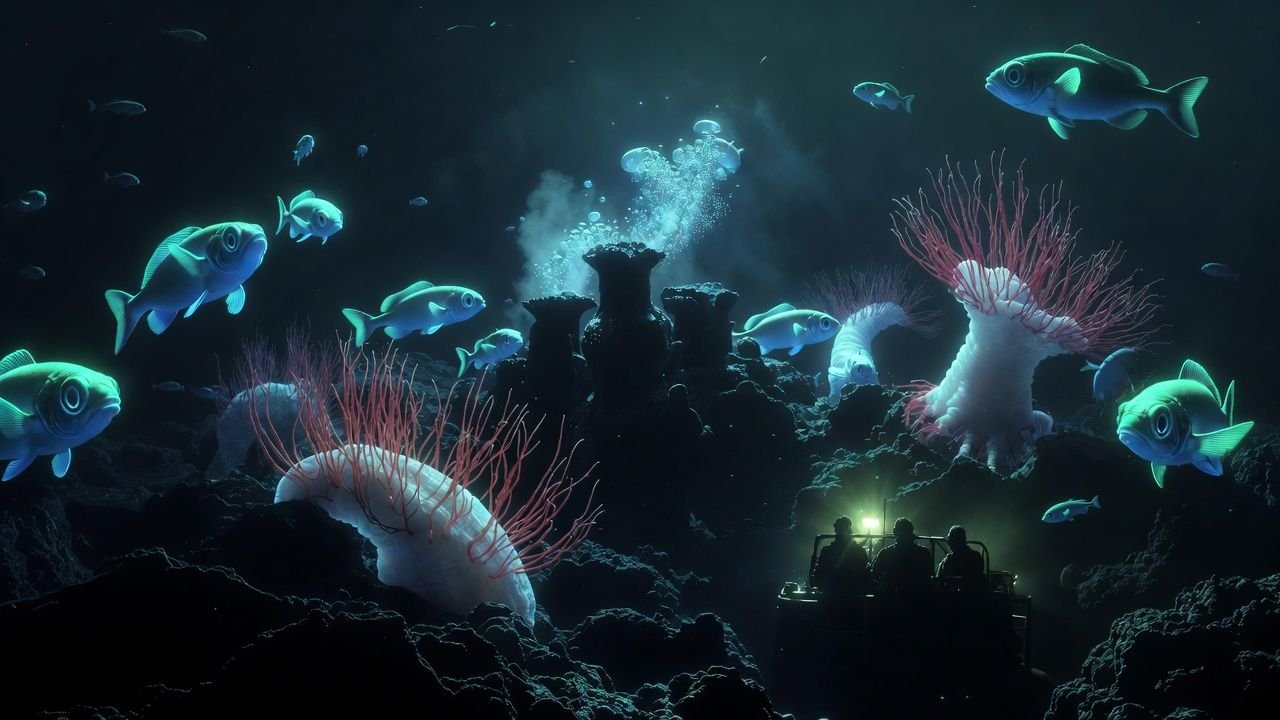
For centuries, the deep ocean was a mystery. Its extreme pressure, darkness, and cold made it almost inaccessible. But advances in submersible technology have opened a window into this alien world. Scientists have discovered entire ecosystems around hydrothermal vents, where creatures thrive without sunlight, relying on chemicals released from the Earth’s core. Strange species like the giant tube worm, with no mouth or stomach, survive by hosting bacteria that convert chemicals into energy.
Even more intriguing are newly found species of bioluminescent fish. Their glowing patterns, used for communication or camouflage, challenge our understanding of evolution. Each discovery emphasizes how much of Earth remains unexplored, reminding us that nature still holds many surprises.
Rediscovering Ancient Forests
While satellites can show us the world’s forests from above, they often miss the intricate details on the ground. Recent expeditions into remote rainforests of the Amazon and Congo have uncovered previously unknown species of plants, insects, and fungi. Some of these plants have unique medicinal properties, potentially holding cures for diseases.
For example, a rare flowering plant discovered in the Amazon exhibits compounds that researchers believe could be used in future cancer treatments. Discoveries like these highlight the critical importance of preserving natural habitats, as countless species might vanish before we even know they exist.
Mountains: More Than Just Peaks
Mountains are often associated with breathtaking landscapes, but they also serve as refuges for unique life forms. In the Himalayas and Andes, scientists have found new species of insects, frogs, and even small mammals that have adapted to extreme altitudes. These discoveries help scientists understand how life can endure under harsh conditions.
In some cases, species thought to be extinct have been rediscovered. For instance, a type of mountain frog in Southeast Asia, unseen for decades, was recently spotted thriving in a secluded valley. Such findings remind us that nature has a remarkable ability to endure and adapt.
Micro-Discoveries: Tiny Giants of Science
Not all discoveries are large or dramatic. Microorganisms, often invisible to the naked eye, are revealing astonishing secrets. Scientists exploring soil and water samples have identified new bacteria and fungi that play essential roles in ecosystems. Some can even break down plastics or detoxify pollutants, offering hope for environmental solutions.
These tiny organisms demonstrate the interconnectedness of life. They remind us that even the smallest creatures can have a massive impact on our planet, shaping everything from soil fertility to climate regulation.
The Role of Technology in Discovery
Modern technology has been a game-changer for exploring nature. Drones, satellite imaging, and AI-assisted data analysis allow researchers to map remote areas, track animal populations, and even predict where new species might be found. Genetic analysis, meanwhile, helps scientists identify species that look identical but are genetically distinct—a process called cryptic speciation.
For example, what was once thought to be a single species of butterfly may actually be several, each adapted to a slightly different environment. Technology continues to reveal that the natural world is far more complex than we ever imagined.
Why These Discoveries Matter
Each discovery in nature carries profound implications. They expand our understanding of evolution, biodiversity, and ecosystems. They also highlight the urgent need to protect our environment. With deforestation, climate change, and pollution threatening countless species, every new discovery is a reminder of what could be lost.
Moreover, nature’s discoveries often inspire innovation. Biomimicry—the practice of emulating nature’s designs—has led to advances in medicine, engineering, and materials science. By studying how organisms solve problems, humans can develop smarter, more sustainable technologies.
Looking Ahead
The journey of discovery is far from over. Scientists estimate that millions of species on Earth remain unknown. As technology improves and exploration continues, the next decade promises even more remarkable finds. From the deepest oceans to remote mountain valleys, nature will keep surprising us.
Embracing these discoveries is not just about curiosity. It’s about understanding our planet and ensuring that future generations can marvel at the same wonders we see today. Nature’s story is still being written, and every discovery adds a new chapter.