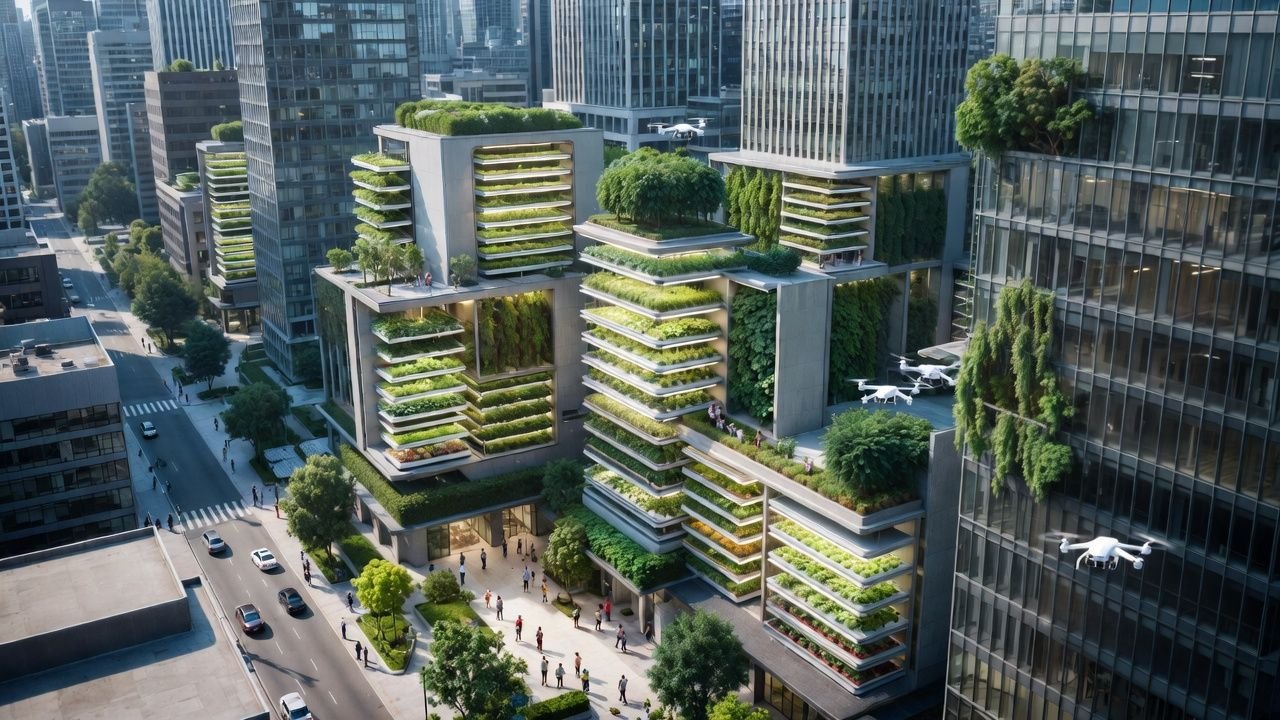
As cities across Europe grow, the demand for fresh, locally sourced food has never been higher. Traditional agriculture struggles to keep up with urban population growth, limited farmland, and climate change impacts. In response, urban vertical farms are emerging as a sustainable solution, transforming cityscapes into green, productive hubs.
Vertical farming is the practice of growing crops in stacked layers, often indoors or in controlled environments. Unlike traditional fields, vertical farms can exist in high-rises, warehouses, or shipping containers. This approach allows cities to produce more food in less space, reduce transportation costs, and provide fresher produce to residents.
Reducing Food Miles and Waste
One of the major advantages of urban vertical farming is its ability to minimize “food miles.” Traditional supply chains often involve transporting vegetables and fruits hundreds or even thousands of kilometers before they reach supermarket shelves. This long journey increases carbon emissions and can compromise freshness. By growing food within city limits, vertical farms ensure produce is harvested at peak ripeness and delivered immediately, reducing waste and environmental impact.
Moreover, vertical farms use technology to optimize production. Automated irrigation systems, LED lighting, and climate control allow precise growth conditions. This means less water and fertilizer are wasted, and crops grow faster year-round. Many European cities, including Paris, Amsterdam, and Berlin, are already adopting these methods to meet local food demands sustainably.
Meeting the Needs of Urban Consumers
Consumers are increasingly conscious of the environmental impact of their food. Vertical farms address this concern while offering high-quality, pesticide-free produce. Salad greens, herbs, strawberries, and even tomatoes are commonly grown in these urban farms. The proximity to markets allows for shorter supply chains, which means consumers can enjoy fresher and tastier fruits and vegetables.
In addition, vertical farms contribute to urban food security. During disruptions like extreme weather or global supply chain issues, local food production ensures cities have reliable access to fresh produce. This has been especially important in recent years, as climate change and logistical challenges have highlighted vulnerabilities in traditional agriculture.
Economic and Social Benefits
Vertical farming is not just about sustainability—it also offers economic and social advantages. These farms create jobs in urban areas, from technicians and agronomists to delivery staff. They can also serve as educational hubs, teaching city residents about agriculture, nutrition, and environmental responsibility.
Some European cities are integrating vertical farms into public spaces and commercial buildings. Rooftop farms, for example, utilize previously unused space and can even improve building insulation. Restaurants and grocery stores are collaborating directly with urban farms to provide “farm-to-table” experiences, connecting consumers with local food producers.
Challenges and Future Prospects
Despite its benefits, vertical farming comes with challenges. High setup costs and energy requirements, especially for LED lighting, can be barriers for smaller operators. However, advances in renewable energy, hydroponics, and aeroponics are helping to make vertical farming more efficient and affordable.
Experts predict that vertical farming will continue to grow across Europe, particularly in densely populated areas where land is scarce. As technology improves and economies of scale are realized, more cities will likely adopt this model to ensure sustainable, local food production for the future.
Conclusion
Urban vertical farming represents a shift in how Europe produces food, responding to the dual challenges of urbanization and sustainability. By reducing food miles, minimizing waste, and offering fresh, local produce, vertical farms are changing the way cities feed themselves. While challenges remain, the expansion of vertical farming is a promising step toward resilient, environmentally responsible urban agriculture.
Cities across Europe are proving that with innovation and careful planning, it’s possible to grow upward—and feed the future.